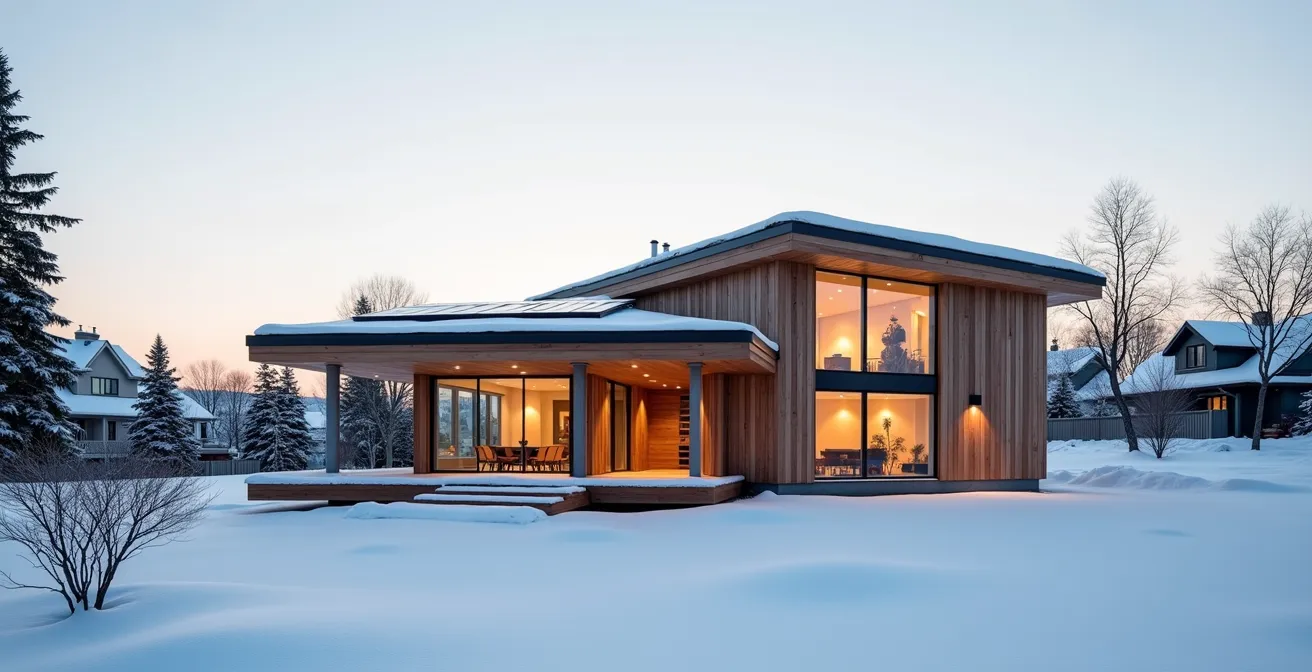
Passive House certification is more than an energy-efficiency badge; it’s a strategic investment in predictable performance and long-term resilience, crucial for Canada’s demanding climate.
- The standard guarantees that a building will perform as designed, eliminating the common “performance gap” seen in other green projects.
- It creates a home that is not just energy-efficient but also supremely comfortable and resilient to extreme weather, from deep freezes to summer heatwaves.
Recommendation: For builders and homeowners planning for the long term, pursuing official certification is the only way to secure the full financial and comfort benefits of a true Passive House.
For Canadian homebuilders and homeowners, the decision to build to the Passive House standard often comes down to a single question: is the premium for official certification truly worth it? The conversation typically revolves around upfront costs versus long-term energy savings, a valid but incomplete picture. Many projects aim for “Passive House principles” without committing to the rigours of certification, believing they can capture most of the benefits without the added expense and complexity. This approach, however, overlooks the fundamental value proposition of the standard.
The real discussion isn’t about insulation thickness or window specs alone. It’s about shifting perspective from viewing a house as a collection of high-performance parts to seeing it as a precisely engineered system. The certification process is not a bureaucratic hurdle; it is a quality assurance framework that guarantees the final product will perform exactly as modelled. It ensures the building is a resilient, healthy, and comfortable sanctuary designed to withstand Canada’s unique climatic challenges, from bone-chilling winters to increasingly hot and smoky summers.
But if the core of this standard is a non-negotiable performance target, what does that mean in practice? This article unpacks the strategic value of Passive House certification in the Canadian context. We will explore why its specific energy target is so critical, how it leverages our climate for free heating, and why it represents a future-proof investment that goes far beyond a lower monthly utility bill. It’s about investing in certainty.
This guide breaks down the core components and strategic considerations of pursuing Passive House certification in Canada. By understanding the ‘why’ behind the rules, you can make a fully informed decision about the value of this premium standard.
Summary: Unpacking the Value of Passive House Certification in Canada
- 15 kWh/m²: Why This Specific Number Defines a Passive House?
- How to Orient Windows to Heat Your Home for Free in February?
- Where to Find Passive House Certified Windows in Canada?
- The Passive House Trap: How to Keep Your Home Cool in July?
- EnerPHit: How to Apply Passive House Rules to an Old Victorian?
- Passive House Retrofits: How Continuous Panels Achieve EnerPHit Standards?
- LEED vs. Zero Carbon Building Standard: Which Badge Should You Chase?
- What Does “Net-Zero Ready” Actually Mean for New Home Buyers?
15 kWh/m²: Why This Specific Number Defines a Passive House?
The entire Passive House standard is built upon a single, non-negotiable figure: a maximum space heating demand of 15 kilowatt-hours per square meter per year. This isn’t an arbitrary number; it’s a meticulously calculated performance target that fundamentally redefines a building’s relationship with energy. It forces a paradigm shift from compensating for energy loss with large heating systems to nearly eliminating that loss in the first place. To put this in perspective, a study on real-world energy consumption reveals that the average space heating demand for Canadian homes is 111 kWh/m² per year. A certified Passive House uses nearly 90% less energy for heating.
This radical efficiency is what makes the engineered system of a Passive House possible. When a building’s energy needs are this low, it can be comfortably heated by passive sources alone: solar gains from windows, waste heat from appliances, and even the body heat of its occupants. The furnace or boiler, traditionally the heart of a Canadian home, becomes a small, secondary backup system. This isn’t just theory. A real-world case study of a Quebec Passive House demonstrated 89% less energy for space heating and 72% less energy overall compared to a conventional new build, proving the standard’s effectiveness even in one of Canada’s coldest climates.
Achieving this target requires an obsessive focus on two key areas: an extremely airtight building envelope and the near-total elimination of thermal bridges. A blower door test is mandatory for certification to quantify and prove this airtightness. This strict performance metric is the core of the standard’s value. It moves beyond prescriptive checklists of “good features” and demands a proven outcome, ensuring the building delivers predictable performance and doesn’t suffer from the “performance gap” that plagues many other green building projects.
How to Orient Windows to Heat Your Home for Free in February?
One of the most elegant aspects of Passive House design is its ability to turn a building into a passive solar collector, especially during the cold, bright days of a Canadian winter. The strategy is simple in concept but requires precise execution: maximize solar heat gain when you need it (winter) and minimize it when you don’t (summer). This is achieved primarily through the careful orientation, sizing, and specification of windows. In Canada, this means prioritizing large, south-facing windows to capture the low-angled winter sun.
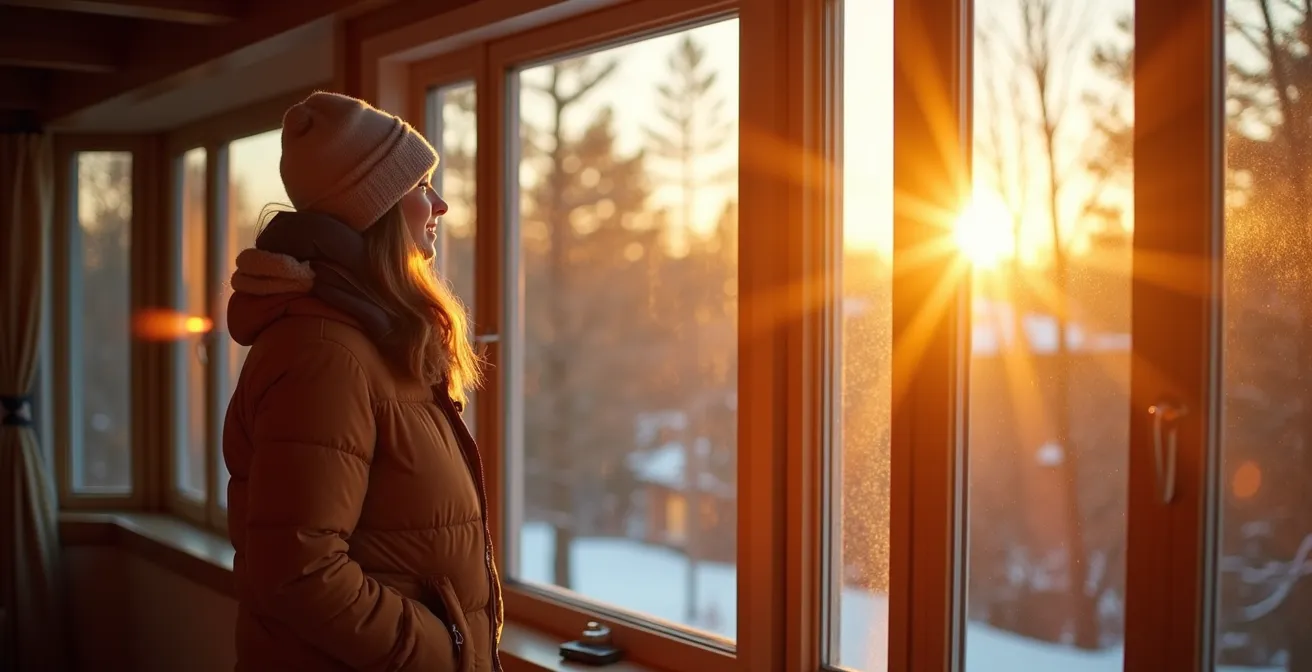
This isn’t just about placing windows on the south side; it’s a calculated part of the home’s engineered heating system. The image below shows how this design philosophy translates into a tangible feeling of comfort, using the sun’s energy to create a warm, inviting space even on the coldest days. This “free” heat significantly reduces the load on any active heating system, helping the home meet its strict 15 kWh/m² target.
The key is specifying the right windows. This involves selecting triple-pane units with a high Solar Heat Gain Coefficient (SHGC) for south-facing elevations. A higher SHGC allows more of the sun’s infrared radiation to pass through the glass, warming the interior. In a super-insulated, airtight Passive House, this captured heat stays inside. Designers also plan for thermal mass, using materials like concrete floors or masonry walls to absorb the solar energy during the day and release it slowly throughout the evening, stabilizing the indoor temperature.
Where to Find Passive House Certified Windows in Canada?
Specifying the right windows is non-negotiable in a Passive House. These components are one of the most technologically complex parts of the building envelope, acting as both insulators and solar collectors. A window that fails to perform as specified can single-handedly prevent a project from achieving certification. For this reason, the Passive House Institute (PHI) and the Passive House Institute US (PHIUS) have a rigorous certification process for components, ensuring they meet stringent criteria for thermal performance (U-value), airtightness, and solar heat gain (SHGC).
For Canadian builders, this raises a critical question: where can you source these highly specialized products? While the European market is mature, the North American market is smaller and more specialized. As a leading local manufacturer notes, “There are only 13 Manufacturers in North America and only 2 in Canada that have window products certified for this program”. This scarcity underscores the expertise required to produce these components. It’s not a matter of adding an extra pane of glass; it’s about engineering the entire assembly—frame, spacers, seals, and coatings—to prevent thermal bridging and optimize performance. The following table highlights some of the key suppliers available to the Canadian market.
| Region | Manufacturer | Certification | Key Features |
|---|---|---|---|
| National | Kohltech (1 of only 2 Canadian manufacturers with certified doors) | PHIUS Certified | Canadian-made, multiple product lines |
| Ontario | VETTA Windows | PHI & PHIUS | Triple-glazed alu-clad wood, European import |
| British Columbia | Innotech Windows (Defender 88PH+) | PHI Certified | Manufactured in Langley, BC |
| Eastern Canada | Rollplast (Kömmerling & Schüco) | PHI Certified | European aluminum and vinyl systems |
Choosing a certified component is a crucial step in de-risking a project. It provides third-party verification that the product will perform as advertised, which is essential for the energy modeling that underpins the entire Passive House design. For builders and homeowners, this means peace of mind and a greater certainty of achieving the final certification and its associated comfort and energy-saving benefits.
The Passive House Trap: How to Keep Your Home Cool in July?
A building designed to trap heat in the winter can quickly become an oven in the summer if not engineered correctly. This is the “Passive House Trap,” a common concern for those new to the standard, especially in a country with continental climates like Canada. An airtight, super-insulated home that is excellent at retaining internal and solar gains in January can be just as effective at trapping them in July, leading to overheating. The Passive House standard directly addresses this with a strict summer comfort requirement: the interior temperature must not exceed 25°C (77°F) for more than 10% of the hours in a year.
Meeting this requirement involves a multi-layered strategy that goes beyond simply opening a window. The first line of defence is external shading. Unlike interior blinds, exterior devices like overhangs, awnings, or brise-soleils block solar radiation before it ever enters the building. The design must be specific to the building’s latitude and orientation, calculated to block the high-angled summer sun while still allowing the low-angled winter sun to penetrate. Deciduous trees are also an effective, natural form of seasonal shading.
The second critical component is the ventilation system. A Passive House relies on a Heat or Energy Recovery Ventilator (HRV/ERV) to provide a constant supply of fresh, filtered air. In summer, these systems can operate in a “summer bypass” mode, bringing in cooler night air to purge the home of daytime heat. An ERV is particularly beneficial in humid regions like Southern Ontario or the Maritimes, as it can transfer some of the outgoing air’s lower humidity to the incoming humid air. In Western Canada, high-quality MERV-13 filters in the ventilation system have become essential for maintaining indoor air quality during wildfire season, demonstrating the standard’s inherent climate resilience. In some cases, a very small, targeted cooling system can be integrated, but the primary goal is always to manage heat through intelligent passive design.
EnerPHit: How to Apply Passive House Rules to an Old Victorian?
While Passive House is often associated with new construction, its principles are just as relevant for upgrading Canada’s vast stock of existing buildings. This is addressed by EnerPHit, the official Passive House standard for retrofits. Given that many older homes, such as Toronto’s iconic Victorians or Montreal’s greystones, have significant heritage value, a “deep energy retrofit” must balance performance with preservation. EnerPHit acknowledges these constraints by slightly relaxing the airtightness and energy demand targets, while still aiming for dramatic improvements.
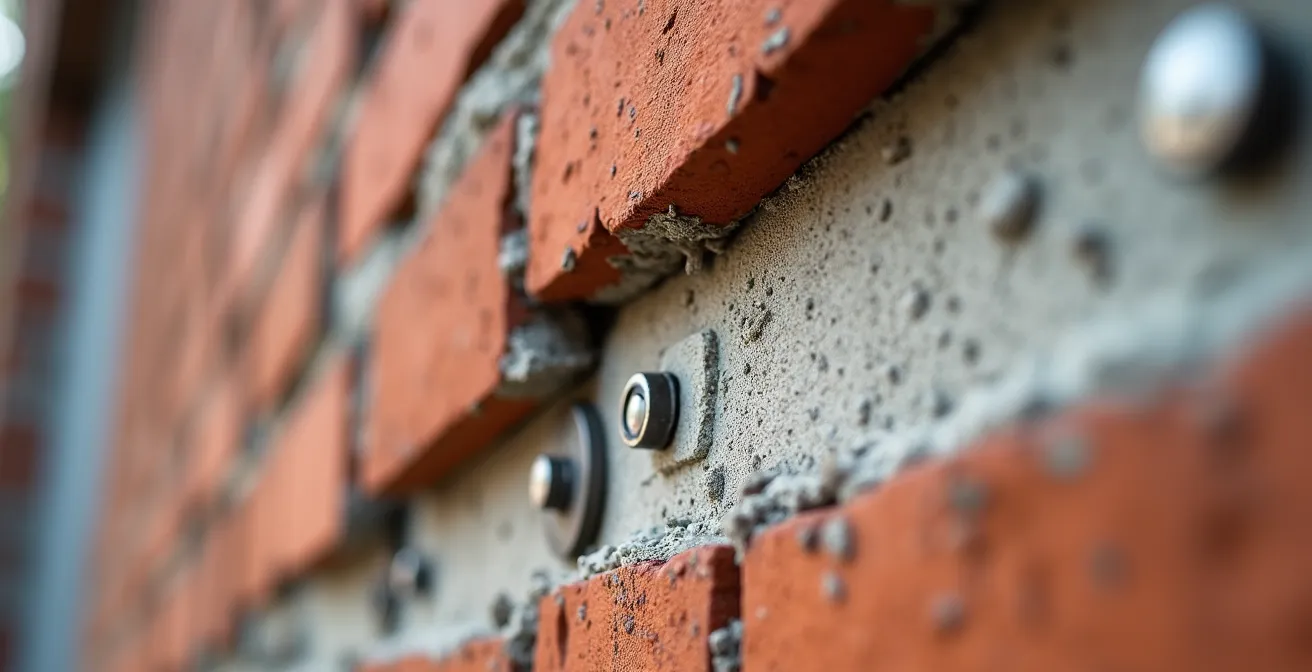
The challenge with retrofits is dealing with existing geometries, thermal bridges, and often, protected façades. The solution usually involves wrapping the building in a continuous layer of exterior insulation, as depicted in the detailed image below. This “outsulation” is the most effective way to create a new, high-performance thermal envelope without disturbing the interior finishes, while meticulously detailing connections at windows, foundations, and roofs.
The results can be transformative. The Sammon Passive House in Toronto, an 80-year-old home, became one of the city’s first EnerPHit-certified projects, achieving energy savings of 75-90% compared to typical homes. The project involved adding insulation, installing triple-pane windows, and creating an airtight envelope with a heat recovery ventilator. While the investment is significant, with some estimates suggesting that a full EnerPHit retrofit can cost around 30% of the home’s value, the outcome is a building that performs like new, with unparalleled comfort, air quality, and acoustic privacy. It’s a powerful demonstration of how we can bring our building stock into the 21st century.
Passive House Retrofits: How Continuous Panels Achieve EnerPHit Standards?
Achieving EnerPHit’s demanding airtightness and thermal performance targets in a retrofit hinges on one primary strategy: creating a new, continuous, and unbroken thermal envelope. The most effective way to do this is by installing continuous insulation panels on the exterior of the existing structure. This approach, often called “outsulation,” effectively wraps the old building in a new, high-performance coat, covering over a multitude of pre-existing thermal bridges and air leaks in one go.
This method avoids the complexities of insulating from the interior, which can be disruptive, compromise interior space, and create risks of moisture being trapped in the wall assembly. By keeping the insulation and the crucial weather-resistive barrier (WRB) on the outside, the original structure is kept warm and dry, protecting it for the long term. The scale of this approach can be breathtaking. A landmark project, the Ken Soble Tower in Hamilton, Ontario, saw an 18-storey residential building transformed into the world’s largest EnerPHit-certified retrofit. This project achieved a staggering 94% reduction in greenhouse gas emissions and a 91% drop in heating energy, primarily through a new, high-performance envelope with exterior panels and triple-glazed windows.
However, the success of this strategy lies in the details. It’s not as simple as just attaching panels to a wall. Meticulous attention must be paid to the connections between the panels, as well as how they integrate with new high-performance windows, the foundation, and the roof assembly. Every penetration for vents or services must be carefully sealed to maintain the integrity of the air barrier. This is where the expertise of a certified Passive House designer and tradesperson becomes invaluable, ensuring the engineered system functions as a whole.
Your Action Plan: Key Points for a Continuous Panel Retrofit Audit
- Envelope Assessment: Identify all surfaces requiring insulation—floor, exterior walls, and roof—and confirm they can receive continuous, unbroken insulation layers to Passive House thicknesses.
- Thermal Bridge Hunt: Inventory all major structural intersections (wall-to-roof, wall-to-foundation, balcony connections) and plan specific details to reduce or eliminate thermal bridging.
- Air & Weather Barrier Strategy: Define the exact location and material for the primary air barrier and the weather-resistive barrier (WRB), ensuring a continuous, fully sealed plane.
- Component Integration: Detail the installation sequence for windows, doors, and service penetrations, specifying how they will be sealed to the WRB and air barrier to prevent leaks.
- Moisture Management: Verify the wall assembly design for your specific Canadian climate zone, ensuring it allows for drying and prevents risks of condensation or ice damming.
LEED vs. Zero Carbon Building Standard: Which Badge Should You Chase?
In the landscape of green building in Canada, Passive House is not the only option. Two other prominent standards are LEED (Leadership in Energy and Environmental Design) and the homegrown Zero Carbon Building (ZCB) Standard from the Canada Green Building Council (CaGBC). For a builder or homeowner, choosing which “badge” to chase depends entirely on their primary goal. While all three aim for better buildings, they prioritize different outcomes.
LEED, the most established standard, uses a broad, point-based system that rewards improvements across multiple categories, including water efficiency, materials, site location, and indoor environmental quality, in addition to energy. A LEED-certified building is a well-rounded, sustainable project, typically achieving 25-30% less energy use than a conventional build. It is widely recognized but offers less certainty on specific energy performance compared to Passive House.
The ZCB Standard, by contrast, is laser-focused on a single metric: carbon. Its primary goal is the elimination of operational carbon emissions. It shares a focus on a high-performance envelope with Passive House but is ultimately technology-agnostic about how the zero-carbon balance is achieved, often relying on on-site renewable energy generation. The table below provides a high-level comparison of their focus areas.
| Criteria | LEED Canada | Zero Carbon Building Standard |
|---|---|---|
| Energy Performance | 25-30% less energy than conventional | Focus on eliminating carbon emissions |
| Canadian Relevance | International standard adapted for Canada | Developed by Canada Green Building Council |
| Market Recognition | Widely adopted since 2004 | Next evolution, performance-based |
| BC Step Code Alignment | Projects can earn LEED points via Step Code | Directly supports provincial carbon goals |
Passive House distinguishes itself by being fundamentally a standard of comfort and energy conservation, with carbon reduction as a welcome byproduct. Its physics-based approach guarantees a specific level of performance, comfort, and resilience that is not the primary focus of either LEED or ZCB. As one analysis highlights, “The ZCB is the only building standard in North America that uses carbon as a key performance metric.” The choice is strategic: LEED for broad sustainability, ZCB for a carbon-neutral statement, and Passive House for guaranteed comfort and radical energy efficiency.
Key Takeaways
- Passive House certification is a guarantee of performance, not just a list of features, ensuring your home operates with radical energy efficiency (15 kWh/m²).
- The standard uses a whole-system engineering approach to provide year-round comfort, managing both winter cold and summer heat through passive design.
- Pursuing certification provides future-proof value by meeting and exceeding upcoming building codes like Canada’s 2032 ‘net-zero ready’ mandate.
What Does “Net-Zero Ready” Actually Mean for New Home Buyers?
The term “net-zero ready” is increasingly appearing in Canadian building codes and real estate marketing, but what does it actually mean for a home buyer or builder? A net-zero ready home is a highly energy-efficient building designed and constructed to a level where its remaining, minimal energy needs could be met by adding a renewable energy system, like rooftop solar panels. In essence, it’s a Passive House without the solar panels. The building itself has done the heavy lifting through a superior thermal envelope and reduced energy demand.
This isn’t a vague aspiration; it’s becoming law. For instance, British Columbia’s CleanBC plan mandates that all new construction must be ‘net-zero ready’ by 2032. This regulatory push is a powerful argument for pursuing Passive House certification today. A home certified to the Passive House standard already meets—and in most cases, significantly exceeds—the efficiency requirements of a net-zero ready building. By certifying now, you are not just building a comfortable home; you are investing in a future-proof asset that will retain its value and compliance for decades to come.
Organizations like Toronto Community Housing Corporation are using PH’s EnerPHit standard to retrofit about 200 towers over the next few years. It’s an absolutely massive, multibillion-dollar project.
– Chris Ballard, Passive House Canada
This commitment from large-scale asset managers like TCHC signals a massive shift in the market. They are not just seeking energy savings; they are investing in the long-term durability, resilience, and future value of their portfolios. For an individual homeowner or builder, the lesson is clear. The “premium” for Passive House certification is the price of future-proofing. It is an investment that ensures the home will not become obsolete as building codes inevitably tighten in the face of our changing climate and energy landscape.
Ultimately, choosing Passive House certification is an investment in certainty. It’s the assurance that your home is a resilient, healthy, and precisely engineered system, ready for the challenges and regulations of the future. To take the next step, begin by engaging a certified Passive House consultant to assess how these principles can be applied to your specific project.