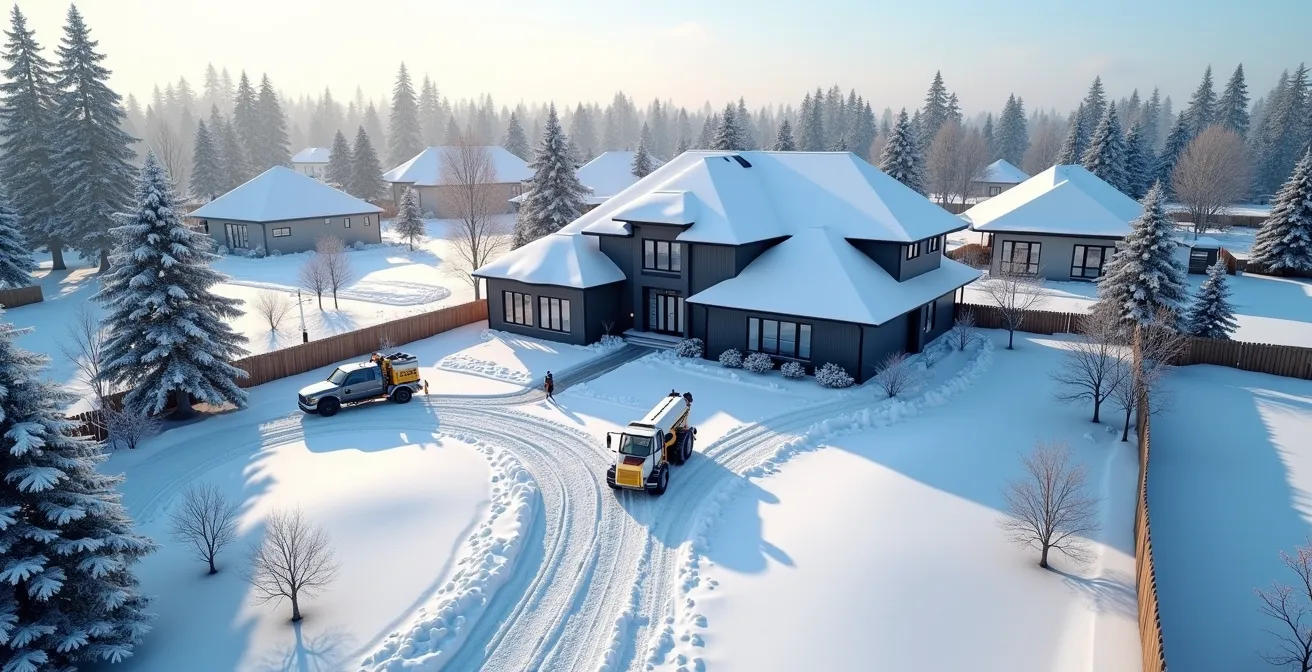
Geothermal’s $30,000 price tag isn’t a simple heating expense; it’s a strategic investment that fundamentally increases your property’s asset value and energy resilience in Canada.
- It effectively decouples your long-term energy costs from the volatile natural gas and oil markets, which are heavily influenced by carbon taxes.
- The core infrastructure (the underground loop) is an exceptionally durable asset with a service life often exceeding 100 years.
- Federal and provincial incentives can significantly accelerate the payback period, making the financial case compelling in many regions.
Recommendation: Move beyond the initial cost and analyze the specific breakeven point for your province. This calculation should factor in local energy prices, available grants, and the projected increases in Canada’s federal carbon tax.
The conversation around home heating in Canada is shifting. Faced with volatile energy prices and a growing federal carbon tax, homeowners are looking beyond the traditional furnace. Geothermal heating often emerges as a premium solution, promising significant long-term savings and a minimal environmental footprint. But this promise comes with a formidable upfront cost, frequently cited at $30,000 or more. This figure often stops the conversation cold, framing geothermal as a luxury few can afford.
Most discussions get stuck on generic benefits like “it’s good for the environment” or “it saves you money eventually.” While true, these platitudes fail to address the core question for a discerning property owner: is this a sound financial decision in the specific context of the Canadian market? The real analysis isn’t about expense, but about investment. What if the $30,000 price tag wasn’t a cost, but a strategic move to future-proof your property, decarbonize your primary asset, and achieve a level of energy independence that traditional systems can’t offer?
This article deconstructs that investment. We will move beyond the surface-level benefits to analyze the tangible financial metrics, technical requirements, and long-term value proposition of a geothermal system in Canada. We’ll explore the critical factors that determine its viability, from the type of land you own to the specific energy landscape of your province, empowering you to calculate if this technology is not just an ecological choice, but the smartest long-term financial move for your property.
To provide a clear and structured analysis, this guide examines the key questions every Canadian homeowner should ask before investing in geothermal energy. The following sections break down the financial, technical, and regulatory aspects you need to master.
Summary: Analyzing Geothermal Heating as a Canadian Home Investment
- Vertical vs. Horizontal Loops: Which is More Cost-Effective for Your Lot?
- Can You Retrofit Geothermal into a House with Ductwork?
- How Long Does the Underground Loop Last Before Replacement?
- Do You Need a Permit to Drill Geothermal Wells in Your Backyard?
- Geothermal + Solar PV: Is This the Ultimate Net-Zero Combo?
- When to Switch to a Heat Pump: Analyzing the Breakeven Point in Canada?
- Why You Need R-10 Under the Slab to Make Radiant Heating Work?
- What Does “Net-Zero Ready” Actually Mean for New Home Buyers?
Vertical vs. Horizontal Loops: Which is More Cost-Effective for Your Lot?
The first major decision in a geothermal project is the design of the underground loop field, the network of pipes that exchanges heat with the earth. Your property’s size and geology will dictate whether a vertical or horizontal configuration is feasible, a choice with significant cost implications. This isn’t just a technical detail; it’s the foundational cost component of your entire system.
Horizontal loops are generally the more budget-friendly option upfront. They involve digging trenches 5 to 6 feet deep and laying pipes across a large area. This requires substantial clear land—often a quarter of an acre or more—making them ideal for rural properties or homes with large lots, particularly in the Prairie provinces where excavation is straightforward. However, the extensive surface disruption means a longer installation time and significant landscaping restoration costs.
Vertical loops, conversely, are the solution for smaller, suburban lots or properties with rocky terrain, such as those on the Canadian Shield. This method involves drilling deep boreholes (150-400 feet) and inserting the pipes vertically. While the surface footprint is minimal, the need for specialized drilling equipment makes the initial installation more expensive. The choice is a direct trade-off between land usage and installation capital.
This comparative table breaks down the core differences to help align your property’s characteristics with the most financially sound loop option.
| Factor | Vertical Loops | Horizontal Loops |
|---|---|---|
| Installation Cost | $20,000-$30,000 | $15,000-$25,000 |
| Land Required | Small footprint (10-20 ft spacing) | 0.25+ acres minimum |
| Drilling/Excavation | 150-400 ft deep boreholes | 5-6 ft deep trenches |
| Best For | Small lots, Canadian Shield areas | Rural properties, Prairie provinces |
| Installation Time | 2-3 days | 3-5 days |
Ultimately, while a horizontal loop may seem cheaper initially, the “cost” of sacrificing a large portion of your yard for several days—and the subsequent landscaping—must be factored in. For many urban or high-value properties, the higher price of a vertical loop is justified by its minimal disruption and preservation of usable land.
Can You Retrofit Geothermal into a House with Ductwork?
One of the most common questions from owners of existing homes is whether geothermal is even an option without a massive, gut-renovation. The good news is that if your home already has a forced-air furnace with ductwork, you are already halfway there. Geothermal heat pumps can integrate with existing ducts, making retrofitting a very viable pathway to high-efficiency heating and cooling.
However, “viable” does not mean “plug-and-play.” The success of a retrofit hinges on whether your current ductwork is up to the task. Geothermal systems operate at lower temperatures than traditional furnaces, meaning they need to move more air to deliver the same amount of heat. Your ducts must be correctly sized to handle this increased airflow, typically around 400 CFM per ton of the system’s capacity, to avoid poor performance and high energy use. A thorough assessment by an HVAC professional is non-negotiable.
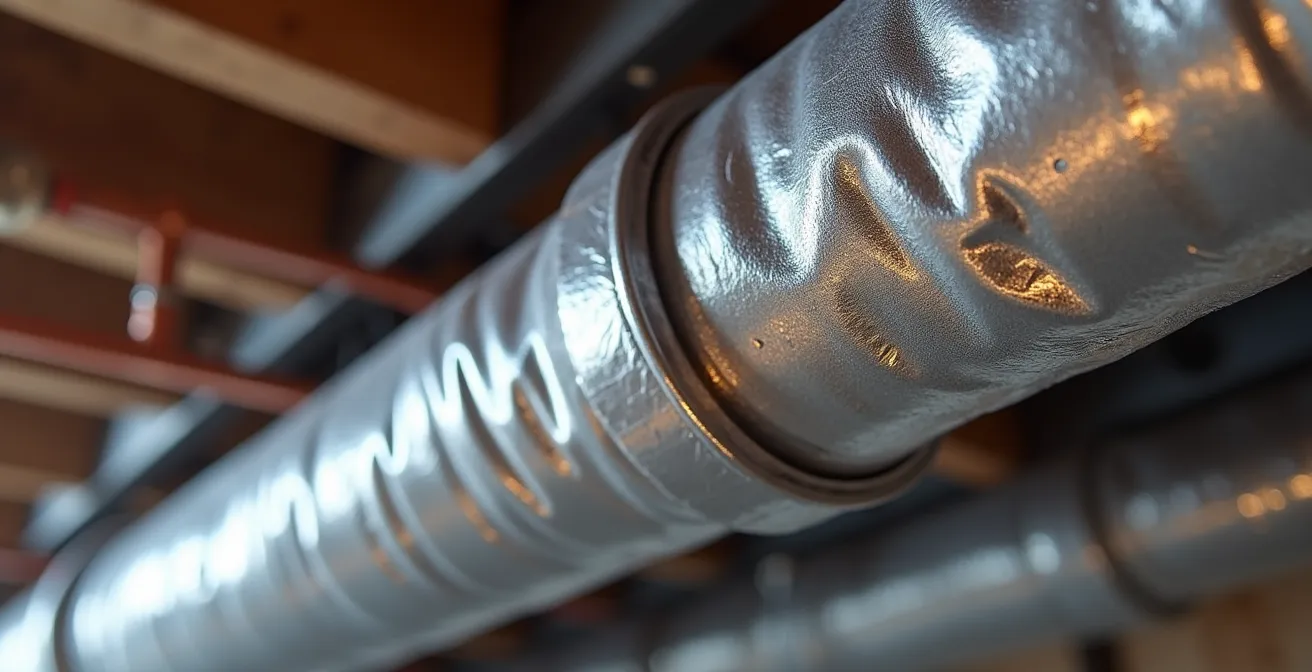
This is where the system shines as an investment. Once installed, a geothermal heat pump can yield impressive returns. Studies consistently show that a geothermal retrofit can lead to 40-60% in annual energy savings over conventional systems. For a Canadian household, this translates into thousands of dollars per year, directly accelerating the payback period of the initial investment. The visual below shows how new components integrate with an existing system.
Beyond ductwork, your home’s overall thermal envelope is critical. Proper insulation and air sealing are essential to get the most out of your investment. A leaky, poorly insulated home will force the geothermal system to work harder, eroding your potential savings. In Canada’s extreme climates, from humid Ontario summers to frigid prairie winters, a hybrid system that pairs geothermal with a small backup furnace for the coldest days of the year is often the most resilient and cost-effective approach.
Action Plan: Your Geothermal Retrofit Readiness Checklist
- Assess existing ductwork capacity: Verify if your current ducts can handle an airflow of approximately 400 CFM per ton of the heat pump’s refrigeration capacity.
- Evaluate insulation levels: Ensure your attic, walls, and basement meet or exceed the current National Building Code of Canada requirements for your specific climate zone to maximize efficiency.
- Check electrical panel capacity: Confirm your home’s electrical panel can accommodate a new dedicated 30-50 amp circuit required for the geothermal heat pump.
- Measure available yard space: Determine if you have the minimum 0.25 acres for a horizontal loop or clear access for drilling equipment for a vertical loop installation.
- Consider hybrid heating options: Especially in regions experiencing temperatures below -30°C, plan for the potential integration of a supplementary backup heating source.
How Long Does the Underground Loop Last Before Replacement?
When considering a $30,000 investment, durability is paramount. Homeowners are accustomed to replacing furnaces every 15-20 years and air conditioners every 10-15. The underground loop of a geothermal system, however, operates on a completely different timescale. This is the core, long-term asset of the installation, and its longevity is one of the system’s most compelling financial arguments.
The pipes used for geothermal loops are made of high-density polyethylene (HDPE), a remarkably resilient and inert material. It is immune to rust, corrosion, and rot, which are the typical failure points for underground infrastructure. Because the loop is buried deep in the ground, it is also protected from UV radiation, physical damage, and the freeze-thaw cycles that affect surface-level equipment. This protected environment contributes to its exceptional lifespan.
Industry engineering standards and material science data confirm this durability. According to plastics manufacturers, high-quality HDPE pipe provides a service life that can exceed 100 years. This means the single most expensive and disruptive component of your geothermal system is effectively a permanent installation. While the indoor heat pump unit will need to be replaced on a cycle similar to a conventional furnace (15-25 years), the buried infrastructure itself will likely outlast the house it serves.
This longevity fundamentally changes the investment calculation. You are not just buying a heating appliance; you are investing in a piece of permanent, energy-producing infrastructure for your property. However, this durability is contingent on one critical factor: installation quality. As the Canadian GeoExchange Coalition points out, the vast majority of loop field issues arise not from material failure, but from human error during installation.
Most loop failures are due to improper installation (bad pipe fusions), not material defects.
– Canadian GeoExchange Coalition, Plastic Piping Institute Technical Note
Ensuring your installer is certified and experienced in heat-fusing HDPE pipes is the single most important step you can take to protect your long-term investment. A properly fused, pressure-tested loop is a 100-year asset; a poorly installed one is a liability.
Do You Need a Permit to Drill Geothermal Wells in Your Backyard?
The idea of drilling deep wells in a residential backyard naturally brings up questions about regulations. The answer is unequivocally yes, you will need permits, but the complexity and jurisdiction vary significantly across Canada. Navigating this regulatory landscape is a crucial step in your project plan, as it can impact both your timeline and your budget.
The primary regulatory distinction is between closed-loop and open-loop systems. Closed-loop systems, which are the most common for residential applications, simply circulate a heat-transfer fluid through a sealed underground pipe network. They generally face fewer regulatory hurdles because they don’t interact directly with groundwater. However, the drilling process itself is almost always regulated.
This is where provincial and municipal rules come into play. In Ontario, for instance, any well construction, including for closed-loop geothermal, falls under Regulation 903 and requires a licensed well driller. Open-loop systems, which draw water from an aquifer and discharge it back, are much more strictly regulated by bodies like Ontario’s Ministry of the Environment, Conservation and Parks (MECP) because they directly impact water resources. Similar frameworks exist in other provinces like British Columbia and Alberta.
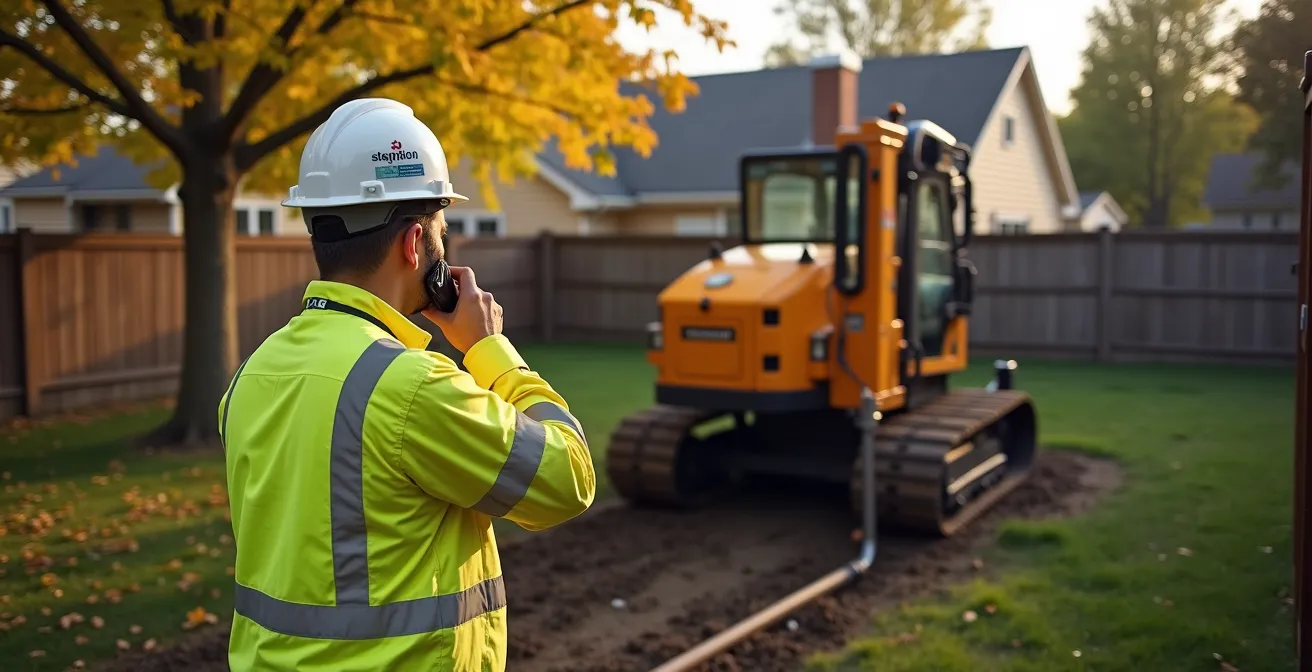
Beyond provincial oversight, municipal bylaws are a major factor, especially in dense urban areas. Cities like Toronto, Vancouver, and Calgary have specific rules governing drilling operations. These can include:
- Noise Restrictions: Limiting drilling to specific hours of the day to minimize disruption to neighbours.
- Property Line Setbacks: Mandating a minimum distance between the well and your property lines, which can constrain the layout of a vertical loop field.
- Access and Remediation: Rules about how heavy equipment can access your property and requirements for restoring any public land (like boulevards) after the work is complete.
A reputable geothermal installer will be well-versed in these local requirements and should handle the entire permitting process as part of their service. This is a key area to vet when choosing a contractor; their familiarity with the local permit office can be the difference between a smooth project and a bureaucratic nightmare.
Geothermal + Solar PV: Is This the Ultimate Net-Zero Combo?
For homeowners aiming for true energy independence, combining geothermal heating with a solar photovoltaic (PV) system represents the gold standard. Geothermal dramatically reduces a home’s energy consumption for heating and cooling, while solar PV generates electricity on-site. Together, they create a powerful symbiotic relationship that can bring a home’s net energy use to zero.
The logic is simple: a geothermal heat pump is an all-electric appliance. While it is incredibly efficient—often delivering 3 to 5 units of heat for every 1 unit of electricity consumed—it still relies on the grid. By adding a solar PV array, you can generate the electricity needed to run the heat pump yourself. During the summer, excess solar generation can be sent back to the grid for credits under provincial net-metering programs, which can then be used to offset electricity costs during the winter when solar production is lower.
The Canadian government actively encourages this pairing through financial incentives. For example, homeowners can receive up to $5,000 from the Canada Greener Homes Grant for installing an eligible heat pump, with separate grants available for solar installations. These programs are a form of “payback acceleration,” directly reducing the initial capital required and shortening the time it takes for the system to pay for itself.
Case Study: Net-Zero Performance in Different Canadian Climate Zones
The synergy between geothermal and solar PV is not uniform across Canada; it is highly dependent on regional climate and provincial policy. In Calgary, the sunny-but-cold climate creates a strong pairing: high solar generation can offset a significant portion of the electricity used by the geothermal system during the long heating season. In contrast, cloudier Maritime cities may see weaker synergy, requiring a larger solar array to achieve the same offset. Provincial net-metering policies are also a critical variable. Nova Scotia’s favourable 1:1 credit system, for example, makes the combination more financially viable than in provinces with less generous, tiered credit systems.
Achieving a true “net-zero” balance requires careful system sizing. An energy modeller or experienced designer will analyze your home’s annual heating and cooling load, local solar insolation data, and your family’s electricity usage patterns. This analysis determines the optimal size for both the geothermal loop field and the solar PV array. The goal is to create a system where, over the course of a year, your home produces as much energy as it consumes. This is the pinnacle of “future-proofing” a property against rising energy costs.
When to Switch to a Heat Pump: Analyzing the Breakeven Point in Canada?
The decision to invest $30,000 in geothermal ultimately comes down to one question: when does it pay for itself? The breakeven point, or payback period, is the most critical financial metric for this technology. It’s not a single number; it’s a dynamic calculation that depends heavily on your province, your current heating fuel, and the rising cost of carbon.
The most dramatic savings are seen when replacing high-cost, carbon-intensive fuels like heating oil or propane. In Atlantic Canada, for example, where oil is prevalent, the high annual savings can lead to a remarkably short payback period. Conversely, in a province like Alberta with historically low natural gas prices, the annual savings are smaller, and the breakeven point is much further out. The federal carbon tax is a key accelerator here. As it increases year after year, the cost of burning natural gas and oil will rise, making the stable operating cost of geothermal more attractive and shortening the payback period.
While the upfront cost of geothermal is high, it’s crucial to compare it to the cost of replacing a conventional system. A new high-efficiency furnace and air conditioner can easily cost $10,000-$15,000. Therefore, the true “geothermal premium” is the difference between these two options. A typical analysis suggests that with moderate energy savings, the geothermal premium can be paid back in under a decade. For instance, some calculations show a payback period of roughly 7.5 years when factoring in average savings against the incremental cost.
The following table provides a simplified breakeven analysis based on provincial energy cost variations. This illustrates how geography is a primary driver of financial viability. “CC-ASHP” refers to Cold-Climate Air Source Heat Pumps, a less expensive alternative to geothermal.
| Province | System Type | Initial Cost | Annual Savings | Breakeven (Years) |
|---|---|---|---|---|
| Alberta | Geothermal vs Gas | $30,000 | $1,200 | 25 |
| Ontario | Geothermal vs Gas | $30,000 | $2,000 | 15 |
| Atlantic Canada | Geothermal vs Oil | $30,000 | $3,500 | 8.5 |
| All Provinces | CC-ASHP vs Gas | $15,000 | $1,000 | 15 |
This data makes it clear: a “one-size-fits-all” answer for Canada is impossible. The business case for geothermal is strongest in provinces with high electricity costs and for homes currently using oil or propane. For homeowners in gas-powered regions, the decision is a longer-term play on future carbon tax increases and property value appreciation.
Key Takeaways
- Geothermal is not an expense but a long-term capital investment in your property’s infrastructure, with core components lasting over 100 years.
- The financial viability (payback period) is highly dependent on your Canadian province, driven by local energy costs and what fuel you are replacing (oil vs. natural gas).
- Installation quality is paramount. The longevity of the system hinges on expert installation, particularly the fusion of the underground pipes.
Why You Need R-10 Under the Slab to Make Radiant Heating Work?
While many geothermal systems connect to forced-air ductwork, the ultimate pairing for comfort and efficiency is with in-floor radiant heating. This combination provides a silent, even heat that many homeowners covet. However, for this premium system to perform, a crucial and often overlooked element is the insulation installed directly beneath the concrete slab: the sub-slab insulation.
Without proper insulation, a significant portion of the heat generated by the radiant tubing will be lost directly to the ground beneath your house. In a Canadian winter, the frozen ground acts as a massive heat sink, constantly pulling warmth away from your living space. You end up paying to heat the earth instead of your home. This is why a minimum of R-10 insulation is considered standard practice by high-performance builders across the country. This thermal barrier is what makes the entire system work.
The “R” in R-10 stands for thermal resistance. This value is typically achieved by installing 2 to 2.5 inches of rigid foam insulation, such as Extruded Polystyrene (XPS) or Expanded Polystyrene (EPS), before the concrete slab is poured. The choice between XPS and EPS often depends on soil conditions; durable Type 4 XPS is preferred for heavy, moist clay soils, while EPS is suitable for well-draining granular soils.
The cost of this insulation may seem like an extra expense on a new build or basement renovation, but its return on investment is incredibly fast. By preventing a massive amount of heat loss, the insulation allows your heating system to run less often and at lower temperatures, generating immediate energy savings. The investment in R-10 sub-slab insulation typically pays for itself in just 2-3 heating seasons. Forgoing it to save a few dollars upfront is a classic example of being penny-wise and pound-foolish, as you will pay for that mistake in higher energy bills for the entire life of the home.
Action Plan: Sub-Slab Insulation Installation Steps
- Verify local building code requirements: Confirm that R-10 is the minimum standard for sub-slab insulation in your Canadian climate zone; colder regions may require more.
- Choose the appropriate rigid foam: Select XPS Type 4 for its high compressive strength in clay soils, or a suitable high-density EPS for well-draining sandy or gravelly soils.
- Calculate the required thickness: Typically, 2.5 inches of high-quality XPS is needed to achieve a true R-10 thermal resistance value.
- Install a continuous vapor barrier: As required by your local building code, lay a sealed vapor barrier over the gravel base before placing the foam boards.
- Lay foam boards with staggered joints: Install the rigid foam boards tightly together, staggering the seams like brickwork to prevent thermal bridging, and tape all joints thoroughly.
- Install radiant tubing or wire mesh: Proceed with the installation of the radiant heating tubes or reinforcing mesh directly on top of the completed insulation layer as per your system’s design.
What Does “Net-Zero Ready” Actually Mean for New Home Buyers?
In the new construction market, the term “Net-Zero Ready” is becoming a powerful marketing tool. It signals a home built to a much higher standard of energy efficiency, designed to make a future transition to full Net-Zero energy performance simple and cost-effective. For a buyer considering a long-term investment like geothermal, understanding this label is critical, as it signifies a house that is perfectly primed for such technology.
A Net-Zero Ready home, as defined by the Canadian Home Builders’ Association (CHBA), is not just a house with a bit more insulation. It is a home that has been holistically designed and built to a rigorous performance standard. According to the CHBA, these homes have been specifically constructed to allow for the easy installation of renewable energy systems, like solar panels, whenever the homeowner decides to add them. This “readiness” involves practical measures like including a conduit from the attic to the electrical panel for future solar wiring.
The core of the “Net-Zero Ready” standard lies in two key performance metrics: exceptional energy efficiency and extreme airtightness. A certified Net-Zero Home is built to be up to 80% more energy efficient than a typical new home built only to minimum building code standards. This dramatically reduces the home’s heating and cooling load, meaning a smaller, less expensive geothermal system can be installed. Furthermore, the CHBA program has a stringent airtightness target, often a maximum of 1.5 air changes per hour (ACH), which minimizes heat loss and ensures superior comfort and indoor air quality.
Net Zero and Net Zero Ready Homes offer whole-house comfort, excellent indoor air quality, and superior energy performance using proven advanced technologies and construction practices.
– Canadian Home Builders’ Association, CHBA Net Zero Home Labelling Program
For a new home buyer, choosing a “Net-Zero Ready” property is a strategic act of future-proofing. It ensures the building’s “bones”—its thermal envelope and air barrier—are of the highest quality. This not only guarantees lower energy bills from day one but also maximizes the return on a future investment in geothermal or solar. It transforms the home from a mere shelter into a high-performance system, ready to achieve complete energy autonomy.
Frequently Asked Questions on Geothermal Systems in Canada
What permits are needed in Ontario for geothermal drilling?
In Ontario, open-loop geothermal systems, which interact with the water table, must be cleared with local regulatory bodies and fall under the Ministry of the Environment, Conservation and Parks (MECP) via Regulation 903. This requires the use of licensed well drillers. Closed-loop systems generally have fewer water-related restrictions, but the drilling itself is still a regulated activity requiring permits.
Are there different requirements for open vs closed loop systems?
Yes, the requirements are significantly different. Open-loop systems directly impact the local water supply by drawing and discharging water, so they require more stringent review and approval from environmental authorities across Canada. Closed-loop systems are sealed and do not exchange water with the environment, so they generally face fewer hydrogeological restrictions, though drilling permits are still necessary.
What about municipal bylaws for drilling?
Absolutely. Dense Canadian cities like Toronto, Vancouver, and Montreal have specific bylaws that can affect your project. These often dictate the hours of operation for drilling to control noise, mandate minimum distances from property lines (setbacks), and may have rules about site access and restoration, all of which can impact your project’s timeline and logistics.
What exactly is a Net Zero Ready home?
According to the Canadian Home Builders’ Association (CHBA), a Net Zero Ready Home is designed and constructed with a superior building envelope and provisions (like pre-installed conduits) to easily accommodate the future installation of a renewable energy system, such as solar panels, allowing it to become a full Net Zero home.
What are the airtightness requirements for a Net Zero Ready home?
The CHBA Net Zero Program sets a high bar for airtightness to minimize energy loss. It has a performance target of a maximum of 1.5 Air Changes per Hour at 50 Pascals (ACH@50) for detached homes and a maximum of 2.0 ACH@50 for attached homes, which is significantly better than a standard code-built house.
How much more efficient are these homes?
Full Net Zero Homes, which Net Zero Ready homes are designed to become, are up to 80% more energy efficient than typical new homes. They achieve this through superior insulation, airtightness, and high-efficiency windows, using renewable energy systems to produce the small amount of remaining energy they need annually.