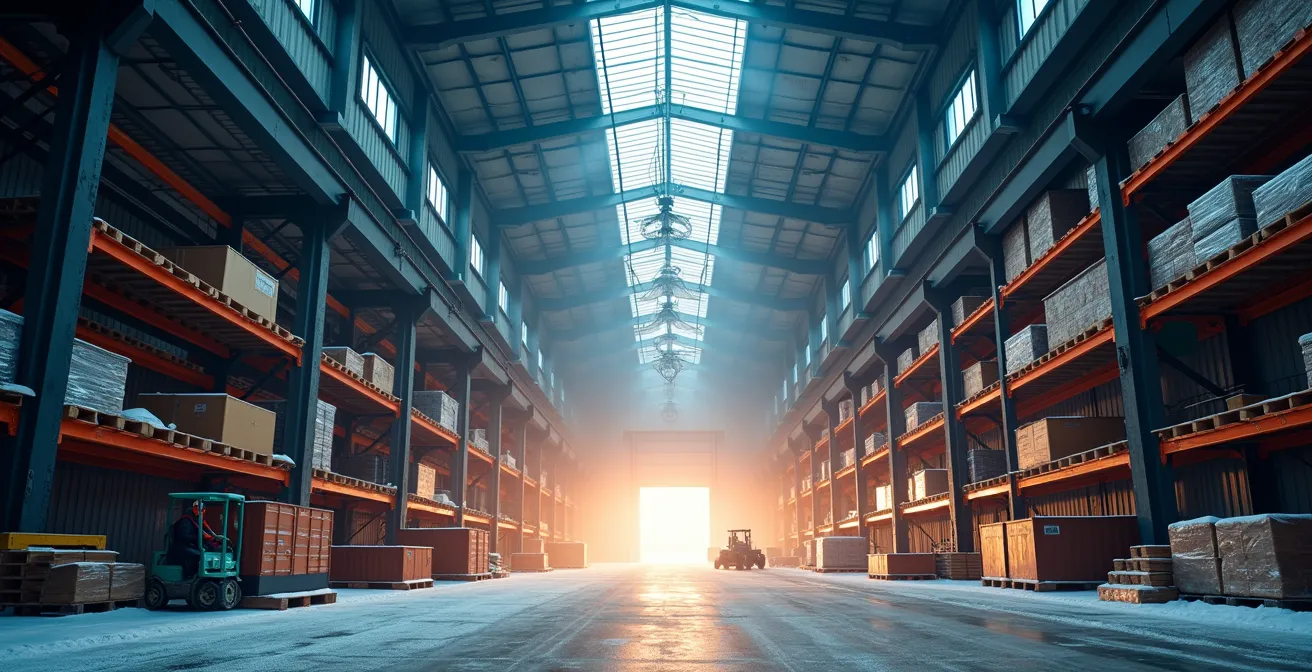
Eliminating thermal stratification in a high-ceiling warehouse is not a heating problem; it’s a solvable systems engineering challenge with a provable ROI.
- Effective destratification relies on moving trapped ceiling heat down efficiently using HVLS fans, not on generating more expensive heat.
- Strengthening the building envelope at its weakest points—loading docks and the roof—provides a greater return than simply increasing thermostat setpoints.
Recommendation: Shift from component-based fixes to a holistic energy audit that quantifies the interaction between air movement, envelope integrity, and thermal mass.
As a facility manager for a large Canadian warehouse, you know the scenario all too well. The thermostats are cranked, but the staff on the concrete floor are wearing jackets. A thermal camera would show a damning picture: a massive reservoir of valuable heat pooled uselessly against the ceiling, 40 feet above where it’s needed. This thermal stratification isn’t just a comfort issue; it’s a relentless drain on your operating budget, driving up heating costs by forcing your HVAC system into a losing battle against physics.
The conventional wisdom offers simple but ineffective advice: install more powerful heaters or just “turn up the fans.” These solutions treat the symptom—cold floors—without addressing the root cause: a broken thermal system. The real issue is a failure to manage the building as an integrated system. The key isn’t to produce more expensive BTUs, but to control the air volume you’ve already paid to heat. This requires a shift in thinking, from simply adding components to strategically engineering the entire building envelope and the air within it.
This isn’t about guesswork. It’s about understanding the physics of thermal mass, the economics of envelope integrity, and the precise mechanics of air movement. By viewing the warehouse as a complete system, you can move from reactive spending to proactive investment. The true solution lies in a calculated strategy where each upgrade—from the type of fan to the roof membrane—is chosen for its quantifiable return on investment and its contribution to a stable, efficient thermal environment.
This guide will deconstruct the challenge of warehouse stratification into its core engineering and economic components. We will analyze the proven strategies and technologies that deliver measurable results in the demanding Canadian climate, providing a clear roadmap to reclaim control over your facility’s energy consumption and operational efficiency.
Summary: How to Stop Stratification in a 40-Foot High Warehouse?
- High-Volume Low-Speed Fans: Do They Really Save 20% on Heating?
- How Air Curtains Pay for Themselves at Busy Loading Docks?
- Why Night Setbacks Don’t Work for Massive Concrete Buildings?
- Inverted Roofs vs. Conventional: Which Survives Foot Traffic Better?
- How to Use Compressor Waste Heat to Warm the Office Space?
- Why Cold Drafts in the Loading Dock Are Costing You Staff Efficiency?
- How High-LR (Light Reflectance) Tiles Save Money on Office Lighting?
- How Insulating Warehouse Ceilings Reduces Heating Costs by 40%?
High-Volume Low-Speed Fans: Do They Really Save 20% on Heating?
The concept of using fans to combat stratification is not new, but the methodology is critical. The goal is not to create a turbulent windstorm but to gently and consistently recirculate the massive volume of trapped warm air from the ceiling back down to the occupant level. This is the domain of High-Volume, Low-Speed (HVLS) fans. Unlike high-speed industrial fans that create disruptive, high-velocity air jets, HVLS fans move enormous columns of air slowly and deliberately.
In winter, these fans are operated in reverse. Instead of pushing air down, they pull colder, denser air up from the floor. This displaced air travels up the walls, across the ceiling, and gently pushes the layer of hot air downwards. This process of destratification equalizes the temperature from floor to ceiling, often reducing the differential to just a few degrees. The result is that your thermostat accurately reflects the temperature at the floor level, allowing the heating system to run significantly less. Reports from Ontario businesses confirm a 15-20% reduction in heating costs through winter destratification alone.
The business case is compelling. In a case study of an Ontario logistics hub, the combination of HVLS fans and provincial energy rebates like the Save on Energy program led to a full payback period of under 24 months. The key is proper engineering and operation, not just installation.
Action Plan: HVLS Winter Operation for Canadian Facilities
- Coverage Planning: Install one HVLS fan per 7,500-10,000 sq ft to ensure adequate air column overlap and complete destratification.
- Mode and Speed: Run fans in reverse (updraft) mode at a low speed (typically 15-30% of max). The goal is to move air without creating a noticeable wind-chill effect for staff on the floor.
- Mounting Height: Maintain a mounting height of 20-30 feet. This provides the optimal distance for the fan to establish a wide, effective cone of influence for destratification.
- System Integration: Integrate fan controls with your Building Automation System (BAS) for automated transitions between summer (cooling) and winter (destratification) modes.
- Pressure Monitoring: In modern, airtight buildings that meet National Building Code of Canada (NBCC) standards, monitor for negative pressure issues that can be exacerbated by fan operation and impact HVAC performance.
How Air Curtains Pay for Themselves at Busy Loading Docks?
A 40-foot-high warehouse is a massive thermal battery, but its integrity is compromised every time a loading dock door opens. In a Canadian winter, an unprotected 10×10-foot opening can hemorrhage thousands of dollars in heated air and allow a torrent of frigid air to pour in, drastically dropping temperatures and forcing HVAC systems into overdrive. While dock seals and shelters are a first line of defense, they are often insufficient for high-traffic docks or in extreme cold.
Air curtains provide a more robust solution by creating a high-velocity, invisible barrier of air that separates the indoor and outdoor environments. This “air door” effectively stops cold drafts, prevents insect ingress in the summer, and contains conditioned air. The key to their financial viability is their efficiency. A properly installed air curtain can reduce heat loss through an open doorway by up to 90%. For Canadian facilities, this translates into a remarkably fast return on investment; studies show that the payback period for air curtains can be as short as one to two years.
The choice between a non-heated (ambient) and a heated unit depends on the application. For a busy loading dock that is open for extended periods in a climate like Winnipeg or Calgary, a heated air curtain not only saves on overall HVAC energy but also significantly improves employee comfort and safety by tempering the incoming air. While the upfront cost is higher, the reduction in localized space heating demand and the impact on productivity often justify the investment, with payback periods typically in the 2-3 year range.
Why Night Setbacks Don’t Work for Massive Concrete Buildings?
The advice to use a night setback on your thermostat is one of the most common energy-saving tips. For a wood-frame house or a small office, it works. The building cools down quickly and heats back up relatively fast in the morning. However, applying this same logic to a massive concrete tilt-up or pre-cast warehouse is a critical and costly mistake. The reason lies in a powerful principle of physics: thermal mass inertia.
Concrete, steel, and the inventory on your racks act as a giant thermal battery. Throughout the day, they absorb and store enormous amounts of heat. When you initiate an aggressive night setback, you are fighting this stored energy. The HVAC system shuts off, but the concrete slowly releases its heat into the space, meaning the building cools far slower than anticipated. In the morning, the situation is reversed. The massive, cold concrete shell now acts as a heat sink, absorbing all the energy your heaters are producing. This leads to extremely long recovery times and a massive spike in energy consumption, often erasing any savings from the setback. You’re not saving energy; you’re just time-shifting it into a less efficient morning peak.
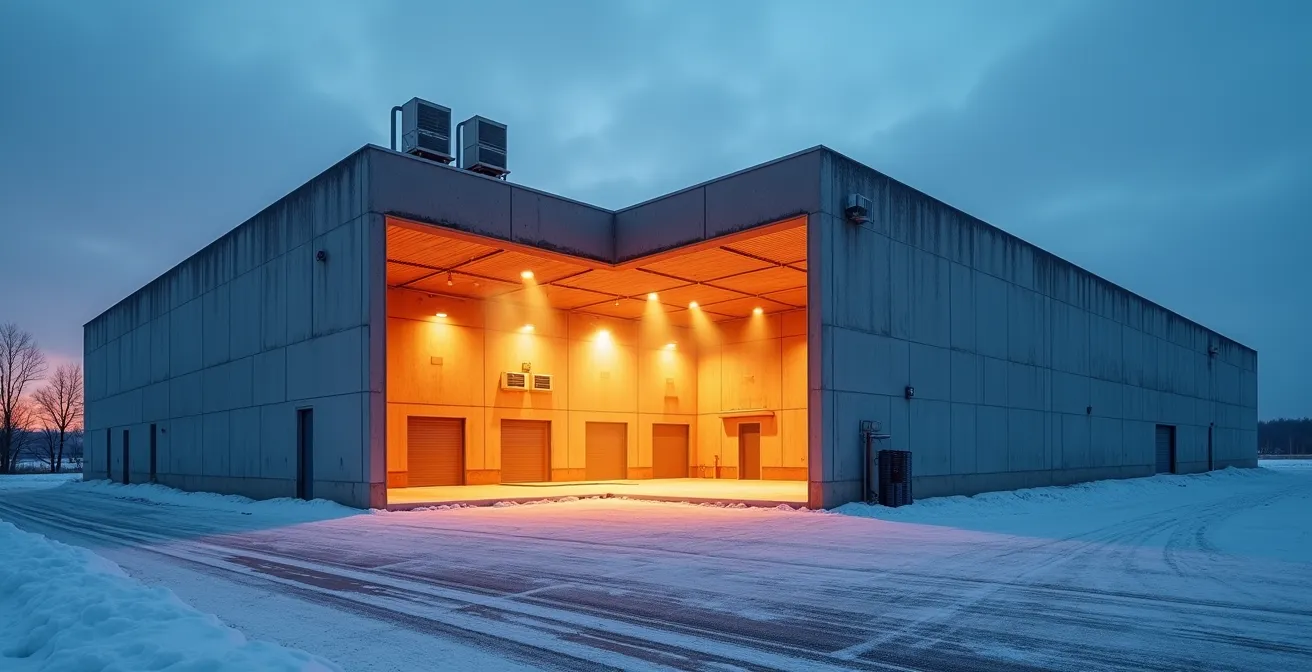
A more intelligent approach, particularly for buildings with high thermal mass, is a strategy known as “thermal coasting.” Instead of a drastic setback, this method uses predictive controls and weather APIs. The system might shut off the heat an hour or two *before* the end of the workday, allowing the building to “coast” on the thermal energy stored in its mass. It then begins a slow, gradual warm-up hours before the morning shift begins, avoiding the inefficient energy spike. This strategy works *with* the building’s physics, not against it.
Inverted Roofs vs. Conventional: Which Survives Foot Traffic Better?
The roof of a large warehouse is more than just a cover; it’s a critical component of the building envelope and a platform for essential HVAC equipment. This means it must endure regular foot traffic from maintenance crews, a factor that is often fatal for conventional roofing systems where the delicate waterproof membrane is the outermost layer. Every dropped tool or careless footstep is a potential puncture, leading to leaks, saturated insulation, and a compromised R-value. In Canada’s freeze-thaw cycles, even a tiny puncture can lead to catastrophic failure.
An Inverted Roof Assembly, also known as a Protected Membrane Roof (PMR), fundamentally solves this problem by reversing the layers. The waterproof membrane is placed directly on the roof deck, and the insulation (typically moisture-resistant extruded polystyrene, or XPS) is placed on top of it, weighed down by ballast or pavers. This design choice offers a dramatic advantage for durability and longevity. The membrane is completely shielded from UV radiation, extreme temperature swings, and, most importantly, physical damage. A major Canadian retailer specifically chose this system for their Montreal facility to ensure protection against water ingress during freeze-thaw cycles and provide durable year-round maintenance access.
The performance differences in a Canadian climate are stark. As the following comparison shows, the inverted design is inherently more resilient to the stresses that degrade conventional roofs.
| Performance Factor | Inverted/PMR | Conventional | Canadian Advantage |
|---|---|---|---|
| Temperature Cycling | 5°C daily range | 55°C daily range | Reduced membrane stress |
| Freeze-Thaw Resistance | Excellent with XPS | Vulnerable at membrane | Critical for NBCC compliance |
| Foot Traffic Tolerance | High – ballast protection | Low – direct membrane contact | HVAC maintenance access |
| Snow Load Benefit | Temporary R-value boost | No benefit | Prairie winter advantage |
| Membrane Protection | Complete UV/physical shield | Fully exposed | Extended service life |
While the initial cost may be slightly higher, the long-term benefits are substantial. Analysis based on data from sources like RCABC’s Roofing Practices Manual indicates that the superior durability and extended service life of inverted roofs can lead to significant reductions in total life-cycle costs, making them a wise long-term investment for any facility manager.
How to Use Compressor Waste Heat to Warm the Office Space?
In any industrial facility, significant heat is generated as a byproduct of essential processes. Air compressors, refrigeration units, and server rooms are constantly shedding thermal energy into the atmosphere—energy you’ve already paid for. A heat recovery strategy captures this “waste” heat and repurposes it, turning an energy liability into a valuable asset. One of the most practical applications is using this captured heat to provide supplementary space heating for adjacent office areas or break rooms.
The process involves installing a heat exchanger in the compressor’s cooling system (either air or liquid-cooled). This device captures heat that would otherwise be vented and transfers it to a medium, typically water or air, which can then be ducted to the office space. This creates a source of “free” heat, reducing the load on your primary natural gas or electric heating system. The implementation must be carefully engineered to comply with Canadian safety standards, such as the CSA B52 Mechanical Refrigeration Code, which governs the design and installation of such systems to prevent any cross-contamination.

Implementing such a project involves a clear, staged approach. It begins with a thermal audit to identify all viable waste heat sources and calculate the recoverable BTUs. This is followed by system design, installation of heat exchangers with appropriate safety controls, and finally, monitoring to track the actual natural gas savings against projections. The financial incentives are significant; programs like the NRCan Commercial Building Retrofit Program can provide funding to cover a substantial portion of the project costs, dramatically shortening the ROI period.
Why Cold Drafts in the Loading Dock Are Costing You Staff Efficiency?
The financial impact of a poorly controlled loading dock environment extends far beyond the utility bill. It directly affects your most valuable asset: your workforce. When staff are forced to work in cold, drafty conditions, human and operational costs begin to mount. Cold stress is not just a matter of discomfort; it is a recognized workplace hazard that impairs cognitive function, reduces manual dexterity, and lowers overall productivity. Employees who are cold are slower, less accurate, and more prone to making errors.
p>
This performance degradation has a direct bottom-line impact. Furthermore, chronic exposure to cold is a contributing factor to musculoskeletal injuries and other health issues. This reality is reflected in safety compliance and insurance metrics. Facilities that fail to maintain a reasonable thermal environment often see a corresponding increase in sick days and claims filed with provincial bodies like the Workplace Safety and Insurance Board (WSIB) in Ontario or other regional Workers’ Compensation Boards (WCB). Therefore, investing in solutions that mitigate cold drafts is as much about workplace safety and risk management as it is about energy savings. A direct correlation exists between proper temperature control and improved safety records, including reduced absenteeism and fewer compensation claims.
The solution is to create a multi-layered defense. While compression dock seals offer a basic seal, they can tear and are less effective for varying truck sizes. Dock shelters provide better coverage but can have gaps. The most effective strategy, especially for busy docks, is to combine physical seals or shelters with an air curtain. This combination provides the best of both worlds: a physical barrier to reduce the initial air exchange and a powerful air barrier to stop residual drafts, ensuring a stable and comfortable working environment for staff, regardless of the weather outside.
How High-LR (Light Reflectance) Tiles Save Money on Office Lighting?
While combatting stratification focuses on thermal energy, a holistic approach to facility efficiency also considers lighting. In the office portions of a warehouse, or in any quality control areas, a significant portion of the energy budget is dedicated to illumination. An often-overlooked strategy to reduce this cost is to make the surfaces of the space work for you by specifying materials with a high Light Reflectance Value (LRV).
LRV is a measure of how much visible light a surface reflects. A surface with a high LRV (typically rated above 80%) bounces more light back into the space, creating a brighter environment without adding a single extra fixture. By using high-LRV paint on walls and ceilings, and selecting high-LRV flooring or epoxy coatings, you can significantly increase the efficacy of your existing lighting system. This allows you to either reduce the number of fixtures needed or lower their wattage, directly cutting electricity consumption. This strategy is particularly effective when combined with daylight harvesting controls, which automatically dim electric lights when sufficient natural light is available.
A Canadian food distribution facility provides a compelling example. They implemented high-LRV epoxy flooring in conjunction with an LED lighting upgrade. The primary goal was to meet stringent safety inspection requirements for visibility, but a major secondary benefit emerged: they achieved a 40% reduction in lighting energy consumption. The highly reflective floor amplified the output of the new LEDs so effectively that they could meet and exceed the required foot-candle levels with less energy. This approach is also a key component of green building certifications like LEED Canada and BOMA BEST, where credits are awarded for specifying high-LRV interior surfaces.
Key Takeaways
- Manage, Don’t Just Heat: Treat the air in your facility as a controllable asset. Use HVLS fans not to create wind, but to strategically move the heat you’ve already paid for back down to the floor.
- Engineer the Envelope: The greatest ROI comes from sealing the building’s weakest points. Focus on a multi-layered defense at loading docks and invest in a roof system (like an inverted roof) built to withstand Canadian climate and maintenance traffic.
- Work With Physics, Not Against It: Acknowledge the power of thermal mass in concrete structures. Abandon aggressive night setbacks in favor of intelligent “thermal coasting” strategies that avoid massive morning energy spikes.
How Insulating Warehouse Ceilings Reduces Heating Costs by 40%?
All the advanced strategies for managing air movement and sealing openings are secondary to the most fundamental law of thermal dynamics in a warehouse: heat rises. Without an effective thermal barrier at the highest point of your building, you are essentially trying to heat the sky. A poorly insulated roof is the single largest source of heat loss in most industrial facilities. Addressing this is the foundational step in any serious energy efficiency program, with the potential to reduce heating bills by up to 40% under optimal conditions. Even conservative estimates show that proper ceiling insulation can deliver a 30% reduction on its own.
For Canadian warehouse retrofits, the choice of insulation material is a critical engineering decision. The right option depends on the existing roof structure, budget, and performance requirements, particularly the need for an effective air and vapor barrier. Closed-cell spray foam, for example, offers an excellent R-value per inch and creates a monolithic air seal, making it ideal for sealing complex geometries. Insulated Metal Panels (IMPs) provide a high R-value and a durable finish in a single product, though at a higher installed cost. The key is to select a system that not only meets or exceeds the National Energy Code for Buildings (NECB) requirements for your climate zone but also provides a continuous air barrier to prevent thermal bridging.
This table compares the common options for retrofitting a Canadian warehouse ceiling, highlighting the trade-offs that a facility manager must consider.
| Insulation Type | R-Value per inch | Air Sealing | Condensation Control | Installation Speed | Cost per sq ft |
|---|---|---|---|---|---|
| Closed-Cell Spray Foam | R-6 to R-7 | Excellent | Vapor barrier included | Fast | $2-4 |
| Insulated Metal Panels | R-7 to R-8 | Good with proper sealing | Requires vapor barrier | Moderate | $8-12 installed |
| Rigid Board (XPS) | R-5 | Requires separate sealing | Good moisture resistance | Slow | $1.50-3 |
Ultimately, insulating the ceiling is not just about adding R-value; it’s about creating a complete, sealed thermal envelope. This investment is what makes all other destratification efforts, like HVLS fans, truly effective. By first containing the heat, you can then manage it efficiently within the space. A retrofit project should always include a thermal imaging inspection to identify and seal all air leakage points, ensuring the theoretical R-value translates into real-world performance.
To move from reactive problem-solving to a strategic, long-term energy management plan, the essential next step is to commission a comprehensive energy audit of your facility. This analysis will quantify your specific areas of thermal loss and provide a data-driven business case for a holistic, integrated upgrade project with a calculated return on investment.