Energy efficiency
Energy efficiency represents far more than a buzzword in Canadian home improvement—it’s a fundamental approach to reducing energy consumption while maintaining or improving comfort levels. In a country where heating costs can consume a significant portion of household budgets and where temperature swings from -40°C winters to +35°C summers create unique challenges, understanding how to optimize your home’s energy performance becomes essential. Whether you’re facing skyrocketing utility bills, considering a major renovation, or simply want to reduce your environmental footprint, the principles of energy efficiency offer a roadmap to achieving multiple goals simultaneously.
This comprehensive resource explores the interconnected world of thermal performance, from the physics governing heat loss through your walls to the financial incentives available through federal and provincial programs. You’ll discover how building envelope improvements work synergistically with mechanical systems, why certain retrofits deliver exceptional returns while others disappoint, and how emerging technologies are reshaping what’s possible in residential energy management. By understanding these fundamentals, you’ll be equipped to make informed decisions that align with both your immediate needs and long-term objectives.
Understanding Energy Efficiency Fundamentals
Before diving into specific improvements, grasping the underlying physics of energy efficiency helps you make strategic rather than superficial decisions. Heat naturally flows from warm to cold areas, and in Canadian climates, this means your home constantly loses heat during extended winter months while gaining unwanted heat during summer peaks.
The Role of R-Value in Canadian Contexts
R-value measures thermal resistance—essentially, how well a material resists heat flow. In Canada, building codes specify minimum R-values that vary by climate zone, with colder regions like the Prairies and Northern territories requiring higher standards than coastal British Columbia. For example, attic insulation in most Canadian jurisdictions now requires R-50 or higher, while walls typically need R-20 to R-24. However, the “effective” R-value of your installed insulation can differ dramatically from laboratory ratings when factors like compression, gaps, or moisture come into play. A wall theoretically rated at R-20 might perform closer to R-12 if poorly installed or compromised by thermal bridges.
Mastering Heat Loss Mechanisms
Heat escapes your home through three primary mechanisms, each requiring different mitigation strategies:
- Conduction: Heat transfers directly through solid materials like studs, concrete, or glass
- Convection: Air movement carries heat away, whether through intentional ventilation or unintentional air leaks
- Radiation: Infrared energy radiates from warm surfaces to cooler ones, particularly relevant for windows facing cold night skies
Understanding which mechanism dominates in different parts of your home helps prioritize improvements. Air leakage often accounts for 25-40% of heating energy waste in typical Canadian homes, making air sealing one of the most cost-effective interventions despite its less glamorous reputation compared to high-tech solutions.
The Building Envelope: Your First Line of Defense
Your home’s building envelope—the physical barrier between conditioned interior space and the outdoor environment—represents the foundation of energy efficiency. Improving this envelope delivers benefits that compound over time and enhance the performance of every other system in your home.
Achieving High Thermal Resistance
Modern insulation strategies go beyond simply stuffing fiberglass between studs. Continuous insulation layers, particularly on exterior walls, eliminate the thermal bridging that occurs through structural framing members. In extreme cold climates common across Canadian provinces, even a 2×6 wood stud creates a thermal bridge that reduces the effective R-value of the wall section by 20-30% compared to the insulation cavity alone. Exterior rigid foam, mineral wool boards, or spray foam can address this limitation, though each material brings specific advantages and installation requirements.
Achieving meaningful thermal resistance in limited spaces—common in older homes with 2×4 wall cavities—requires creative solutions. High-performance insulations like closed-cell spray foam or vacuum insulated panels offer superior R-value per inch, though at significantly higher costs. The diminishing returns trap appears when you chase perfection: upgrading from R-20 to R-30 delivers substantial savings, but jumping from R-50 to R-60 in an attic might take decades to recover the additional investment.
Preventing Thermal Bridging
Thermal bridges represent invisible energy drains where heat bypasses insulation through more conductive materials. Steel studs, concrete balconies, and window frames create particularly problematic bridges. In Canadian construction, identifying these bridges often requires thermal imaging during professional energy audits. Common culprits include:
- Floor joists penetrating exterior walls in cantilevered sections
- Basement rim joists where foundation meets floor framing
- Window and door frames, especially older aluminum-framed units
- Corner studs and wall intersections with multiple framing members
Addressing thermal bridges during renovations prevents energy loss that can undermine even premium insulation investments. Thermal break materials, strategic framing techniques, and careful detailing around penetrations make substantial differences in real-world performance.
Air Sealing: The Hidden Priority
Air leaks undermine insulation effectiveness by allowing convective heat loss and can introduce moisture that degrades insulation performance. Professional blower door testing quantifies envelope tightness, measuring air changes per hour at a standard pressure difference. A typical existing Canadian home might test at 8-12 ACH50 (air changes per hour at 50 Pascals pressure), while modern energy-efficient homes target 3 ACH50 or lower, and passive house standards require below 0.6 ACH50.
The biggest leaks rarely occur where you’d expect. Rather than around windows and doors (which homeowners often address), major air leakage paths include:
- Attic hatches and bypasses where plumbing or wiring penetrates ceiling assemblies
- Basement rim joists and sill plates
- Recessed lighting fixtures in insulated ceilings
- Chimney and furnace flue penetrations
- Electrical outlets and switches on exterior walls
Optimizing Window Performance
Windows present unique challenges—they must provide views, natural light, and solar heat gain while minimizing heat loss. Modern high-performance windows feature multiple glazing layers, low-emissivity coatings, inert gas fills, and thermally broken frames. A premium triple-glazed window with argon fill and low-e coatings might achieve U-0.18 (R-5.5), representing a dramatic improvement over older single-glazed units at U-1.0 (R-1).
However, heat loss through window frames often exceeds losses through glazing in quality units. Upgrading window efficiency requires examining the entire assembly, not just the glass. Fiberglass and vinyl frames outperform aluminum, while proper installation techniques prevent air leakage around the rough opening that can negate the benefits of premium windows.
Financial Considerations and Return on Investment
Energy efficiency improvements require upfront investment, making financial analysis essential for prioritizing projects. Understanding both immediate costs and long-term savings helps you make rational decisions aligned with your budget and timeline.
Calculating True Retrofit ROI
Simple payback calculations—dividing project cost by annual energy savings—provide a starting point but miss crucial factors. Comprehensive ROI analysis considers energy price escalation, financing costs, available incentives, increased property value, improved comfort, and avoided future repairs. A $8,000 attic insulation upgrade saving $600 annually appears to have a 13-year payback, but factoring in a $2,000 government rebate, 3% annual energy cost increases, and enhanced resale value might reveal an effective payback under 7 years.
Prioritizing retrofits for maximum ROI typically follows this hierarchy in Canadian homes:
- Air sealing (highest return, lowest cost)
- Attic insulation upgrades
- Basement insulation and rim joist sealing
- Window replacements (often lower ROI but high comfort improvement)
- Wall insulation retrofits (complex and expensive, but necessary in poorly insulated homes)
Navigating Government Incentives
Federal and provincial programs significantly improve energy retrofit economics. The Canada Greener Homes Grant, for instance, provides up to several thousand dollars for eligible improvements, while provincial utilities often offer additional rebates. Some programs require pre- and post-renovation energy audits by certified professionals—an added cost that validates improvements and unlocks incentive payments.
Combining loans and grants strategically maximizes financial benefits. Interest-free or low-interest financing programs allow you to implement more comprehensive upgrades while using incentive payments to reduce principal or accelerate repayment. Understanding peak energy pricing structures in your province helps evaluate projects: in jurisdictions with time-of-use rates, improvements that reduce peak demand deliver disproportionate savings.
Beyond Energy: Additional Financial Benefits
Energy efficiency improvements can reduce home insurance premiums when they enhance safety and durability. Upgraded electrical systems, improved moisture management, and reduced freeze risk from better-heated spaces all decrease insurance risk profiles. Some insurers offer specific discounts for certified energy-efficient homes or particular improvements like heat pump water heaters that reduce fire risk compared to traditional systems.
Mechanical Systems and Modern Technologies
After optimizing your building envelope, mechanical systems become the next frontier for energy savings. Modern heating, cooling, and ventilation technologies offer efficiency levels unimaginable with older equipment, though proper integration and operation remain crucial.
Heat Pumps: The Canadian Efficiency Frontier
Cold-climate heat pumps have revolutionized Canadian home heating, maintaining efficiency even at temperatures below -25°C. These systems move heat rather than generating it through combustion, delivering 2-3 units of heat energy for every unit of electricity consumed. Air-source heat pumps handle both heating and cooling, while ground-source (geothermal) systems leverage stable underground temperatures for even higher efficiency, though at significantly higher installation costs.
Calculating geothermal payback requires examining your specific circumstances: drilling costs vary dramatically based on geology, available land, and accessibility. A system costing $25,000-$40,000 might save $2,000-$3,000 annually compared to oil or propane heating, suggesting 10-15 year payback before incentives. Combining geothermal with solar panels creates synergies where summer solar production powers shoulder-season heat pump operation.
Smart Controls and Automation
Programmable and learning thermostats optimize heating and cooling schedules automatically, reducing energy waste when spaces are unoccupied. Advanced systems learn household patterns, adjust for weather forecasts, and coordinate multiple zones for room-by-room climate control. Properly programmed setbacks—reducing temperatures during sleeping hours or daytime absences—typically save 10-15% on heating costs with minimal comfort sacrifice.
Emerging automation extends beyond thermostats to manage window coverings, optimizing them for passive solar gain in winter while blocking summer heat. Automated blinds working in concert with smart thermostats create dynamic responses to changing conditions that manual operation rarely achieves.
Integrated System Design
Mechanical systems perform best when designed as integrated wholes rather than individual components. Proper sizing becomes critical—oversized equipment cycles inefficiently and fails to dehumidify effectively, while undersized systems struggle to maintain comfort during extreme conditions. Professional load calculations accounting for your improved building envelope prevent the common mistake of installing equipment sized for pre-renovation conditions.
Performance Standards and Testing
Achieving meaningful energy efficiency requires verification, not just intention. Testing and certification programs provide objective metrics that guide improvements and validate results.
Understanding Energy Audits
Professional energy audits combine blower door testing, thermal imaging, and detailed inspections to identify improvement opportunities. Auditors generate reports quantifying current performance, recommending prioritized upgrades, and projecting energy savings. While audits cost several hundred dollars, they prevent costly mistakes and often reveal non-obvious problems like hidden air leakage paths or moisture issues requiring attention before adding insulation.
Interpreting audit reports requires understanding the modeling assumptions and recognizing that projected savings represent estimates, not guarantees. Actual results depend on installation quality, occupant behavior, and future weather patterns. Conservative estimates using historical climate data and proven technologies provide more reliable planning information than optimistic projections.
The Passive House Standard
Passive House (Passivhaus) represents the world’s most rigorous energy efficiency standard, requiring ultra-tight envelopes, exceptional insulation, high-performance windows, and heat recovery ventilation. Buildings meeting this standard consume approximately 90% less heating energy than typical construction, with total energy use below 15 kWh/m²/year. While new construction more easily achieves certification, retrofit projects can target Passive House principles even if full certification proves impractical given existing constraints.
Energy Generation and Long-Term Independence
The ultimate evolution of energy efficiency involves generating your own energy, potentially achieving net-zero or net-positive status where annual energy production meets or exceeds consumption.
Solar Production and Integration
Rooftop solar photovoltaic systems convert sunlight to electricity, with Canadian installations facing challenges from reduced winter sun angles and snow coverage. South-facing roofs with 30-45 degree slopes optimize year-round production in most provinces. Net metering programs allow you to export excess summer production to the grid, banking credits for winter use when production drops but heating loads peak.
System sizing depends on your reduced consumption post-retrofit. A home using 10,000 kWh annually might need an 8-10 kW solar array to offset consumption, costing $20,000-$30,000 before incentives. Provincial renewable energy incentives and federal solar tax programs improve economics, though payback periods typically extend 15-25 years based solely on electricity savings.
Electrification and Load Management
Electrifying home systems—replacing fossil fuel heating, hot water, and cooking with electric alternatives—positions you to leverage increasingly renewable electrical grids and potentially own solar production. Heat pump water heaters, induction cooking, and electric heat pumps eliminate combustion equipment and associated ventilation losses.
Managing electrical loads strategically becomes important as homes electrify. Optimizing EV charging to occur during off-peak hours when electricity costs less and grid capacity is available benefits both your budget and the broader electrical system. Smart home energy management systems can coordinate major loads—shifting water heating, EV charging, and pool pumps to optimal times automatically.
Achieving meaningful energy efficiency in Canadian homes requires integrating envelope improvements, mechanical system upgrades, behavioral changes, and potentially energy generation. By understanding the fundamentals explored here and prioritizing improvements based on your specific circumstances, you can dramatically reduce energy consumption while enhancing comfort, property value, and environmental performance. The journey toward energy efficiency isn’t a single project but an evolving process of continuous improvement guided by measurement, testing, and informed decision-making.
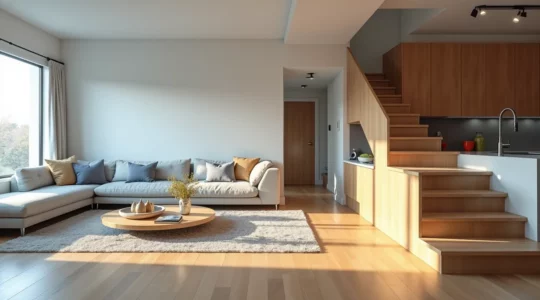
Why Heating the Whole House is Obsolete: The Case for Smart Zoning
Smart zoning isn’t just an upgrade; it’s a fundamental shift that makes whole-house heating an obsolete and costly model for Canadian homeowners. It directly solves thermal imbalances (hot upstairs, cold basement) that a single thermostat can’t fix. By heating only…
Read more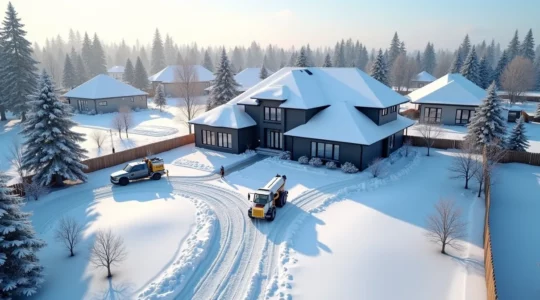
Is Geothermal Heating Worth the $30,000 Price Tag in Canada?
Geothermal’s $30,000 price tag isn’t a simple heating expense; it’s a strategic investment that fundamentally increases your property’s asset value and energy resilience in Canada. It effectively decouples your long-term energy costs from the volatile natural gas and oil markets,…
Read more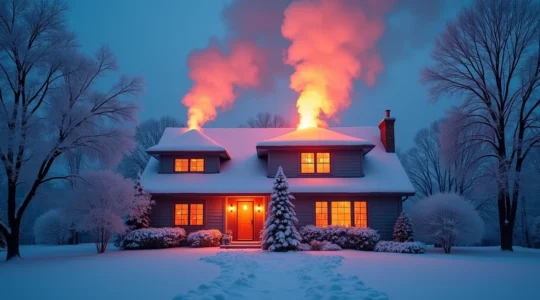
Why Is Your Heating Bill Still High, Even With R-60 Insulation in the Attic?
Piling on more insulation won’t lower your heating bills if your home’s air barrier is breached. The “stack effect” actively sucks cold air into your home, bypassing thousands of dollars in insulation. Hidden gaps around recessed lights and attic hatches…
Read more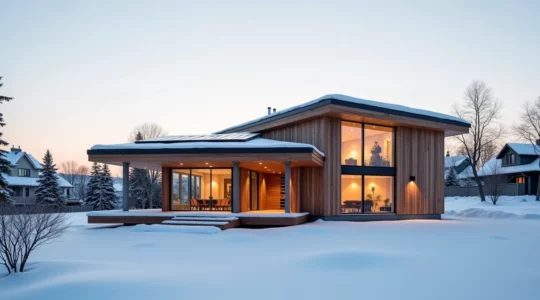
Is Passive House Certification Worth the Premium in Canada?
Passive House certification is more than an energy-efficiency badge; it’s a strategic investment in predictable performance and long-term resilience, crucial for Canada’s demanding climate. The standard guarantees that a building will perform as designed, eliminating the common “performance gap” seen…
Read more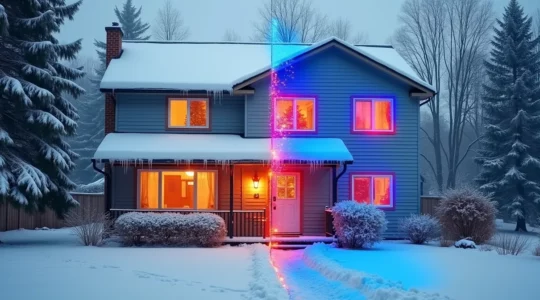
Conduction, Convection, Radiation: Which One is Killing Your Energy Bill?
The frustrating truth behind your high heating bill isn’t the amount of insulation you have, but the misunderstood physics of how heat escapes your Canadian home. Even with R-60 insulation, hidden air currents (convection) inside your walls can slash your…
Read more
How to Get the Maximum $5,000 Grant for Insulation in Canada?
In summary: Treat the mandatory pre-retrofit audit as the strategic blueprint for your entire project, not a bureaucratic hurdle. Master the specific photo documentation rules to build an undeniable evidence package for your claim. Use the interest-free loan as a…
Read more
Why Do You See Ghost Lines on Your Ceiling in Winter?
Those faint, dark lines on your ceiling that trace your home’s framing are not a sign of a leak or simple dust accumulation. They are a diagnostic symptom of a phenomenon called “thermal bridging,” where heat bypasses your insulation through…
Read more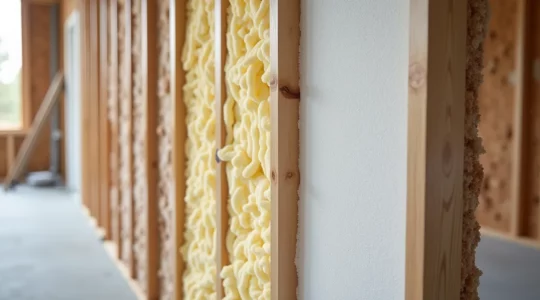
Which Insulation Gives the Highest R-Value per Inch for Thin Walls?
The highest real-world R-value in thin 2×4 walls comes from an engineered hybrid system, not just from choosing the single material with the highest nominal rating. Closed-cell spray foam offers the best R-value per inch combined with a crucial air…
Read more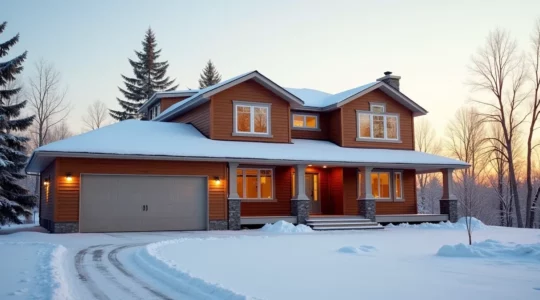
Beyond the Furnace: A Step-by-Step Guide to Saving $600/Year on Canadian Heating Bills
Cutting your heating bill by $600 isn’t about buying a new furnace; it’s about treating your house as a complete thermal system and plugging the leaks first. Your home’s “building envelope” (walls, attic, foundation) is more critical than your furnace’s…
Read more