Construction and renovation
Construction and renovation in Canada demand a fundamentally different approach than in milder climates. When winter temperatures plunge to -40°C in the Prairies while summer heat peaks at +35°C, and when coastal regions endure months of rain while the interior battles bone-dry cold, your building envelope becomes the critical line of defense between comfort and catastrophe. Every decision—from foundation insulation to attic ventilation—must account for these extreme swings.
Whether you’re building new or upgrading an existing home, understanding the interplay between insulation performance, air sealing, and moisture management isn’t optional—it’s essential. This comprehensive resource connects the fundamental principles of building science with practical strategies for creating durable, energy-efficient homes that withstand Canadian weather extremes. You’ll discover why certain materials fail prematurely, how to avoid costly moisture problems, and what truly matters when navigating codes, permits, and long-term performance.
Why Canada’s Climate Demands Superior Building Performance
Canada spans multiple climate zones, each presenting distinct challenges that directly impact construction decisions. The temperature variance between seasons can exceed 70°C in some regions—a swing that subjects building materials to constant expansion and contraction cycles. This movement creates gaps in air barriers, compromises insulation contact, and can lead to structural damage if not properly addressed.
Freeze-thaw cycles pose particular risks. When moisture penetrates materials and then freezes, it expands with tremendous force, cracking concrete, lifting foundations, and degrading exterior finishes. Homes in regions experiencing frequent temperature fluctuations across the freezing point—common in Southern Ontario, Quebec, and British Columbia’s interior—face accelerated wear unless materials are specifically selected for durability under cyclic stress.
Consider these climate-specific realities:
- Northern communities require insulation values (R-60+ in attics) that would be considered excessive elsewhere
- Coastal regions must manage year-round humidity while maintaining thermal performance
- Prairie homes need protection against extreme temperature differentials and high winds
- Remote construction faces unique logistics challenges for material delivery and skilled labour
Understanding your specific climate zone—as defined by the National Building Code of Canada—determines everything from minimum insulation requirements to appropriate vapour retarder placement. A strategy that works perfectly in Vancouver can fail catastrophically in Winnipeg.
Building Science Fundamentals: The Heat, Air, and Moisture Triangle
Successful construction depends on managing three interconnected elements: heat flow, air movement, and moisture transport. Think of your home as a unified environmental separator system—a continuous boundary that must control all three simultaneously. When one element fails, the others typically follow.
Heat Transfer and Insulation Performance
Heat moves through your building envelope via three mechanisms: conduction (through solid materials), convection (via air currents), and radiation (infrared energy). Insulation primarily addresses conduction, which is why maintaining continuous R-value matters more than peak values with gaps. A wall rated R-20 with thermal bridging at studs may perform closer to R-15 in practice.
Canadian construction increasingly focuses on reducing thermal bridging through advanced framing techniques—spacing studs at 24 inches rather than 16, using insulated headers only where structurally necessary, and eliminating unnecessary jack studs. These methods reduce wood in the wall assembly, allowing more space for insulation and fewer paths for heat loss.
Air Leakage: The Silent Performance Killer
Air moving through your building envelope carries both heat and moisture, undermining insulation effectiveness and creating condensation risks. A home can have R-40 walls but still feel drafty and expensive to heat if the air barrier isn’t continuous and properly sealed. Common failure points include electrical box penetrations, plumbing chases, attic hatches, and the critical junction between foundation and framed walls.
Modern building codes increasingly emphasize blower door testing to verify air tightness, with targets typically around 2.5 air changes per hour at 50 Pascals (ACH50) for new construction. Achieving these standards requires meticulous attention to taping joints, sealing penetrations, and treating the air barrier as a continuous plane that wraps the entire conditioned space.
Moisture Management and Drying Potential
Every building assembly must be able to dry when it gets wet—and it will get wet, either from construction moisture, occupant activities, or occasional weather-driven water entry. The key is ensuring drying potential exceeds wetting potential. This involves understanding vapour drive direction (which changes seasonally in Canada), selecting appropriate vapour retarders, and ensuring exterior cladding systems allow moisture escape.
Wall assemblies need to breathe outward in winter (when interior humidity is higher) and potentially inward in summer (when air conditioning creates reverse vapour drive). Incorrectly placed vapour barriers can trap moisture between layers, leading to mold, rot, and structural failure. The “warm side” rule—placing vapour retarders toward the heated interior—remains generally valid in Canadian climates, but specific assemblies require careful analysis.
Choosing and Installing Insulation That Performs
Selecting insulation involves more than comparing R-values per inch. Material characteristics, installation quality, long-term performance, and compatibility with your building assembly all matter significantly.
Material Selection for Canadian Conditions
Common insulation types each offer distinct advantages:
- Fibreglass batts: Cost-effective and familiar to trades, but performance suffers dramatically with gaps or compression
- Mineral wool: Superior fire resistance and better performance when slightly compressed, ideal for soundproofing applications
- Spray polyurethane foam: Creates simultaneous insulation and air barrier, excellent for irregular spaces and retrofits, but requires careful application timing and moisture management
- Rigid foam boards: High R-value per inch for exterior applications, critical for thermal break details, but requires proper detailing for fire safety
- Dense-pack cellulose: Excellent for retrofit applications, fills cavities thoroughly, though settling can occur if density isn’t adequate
Below-grade applications demand closed-cell or rigid foam products that resist moisture absorption. Exterior foundation insulation in areas with frost penetration must extend below the frost line—which varies from 1.2 meters in southern regions to over 2.5 meters in the far north—and requires proper drainage detailing to prevent hydrostatic pressure buildup.
Installation Quality: Where Theory Meets Reality
Even premium insulation products fail if poorly installed. Fibreglass batts must completely fill cavities without compression or gaps—a standard rarely met in practice. Spray foam requires precise temperature and humidity conditions during application; cold substrate temperatures or high ambient moisture can compromise adhesion and expansion, creating voids or separation from framing.
Coordination between trades critically affects performance. Electricians who compress insulation around wiring, plumbers who disturb air barriers, or HVAC installers who penetrate assemblies all create thermal and air leakage problems unless proper sequencing and remediation occur. Successful projects establish clear protocols for maintaining building envelope integrity throughout construction.
Special Considerations for Critical Details
Certain building elements require particular attention:
- Headers and corners: Often under-insulated due to structural requirements; insulated headers and advanced framing reduce thermal bridging
- Recessed lighting: Pot lights create huge penetrations in ceiling air barriers; use IC-rated, airtight fixtures or surface-mount alternatives
- Rim joists: Common thermal weak point where floor systems meet exterior walls; requires separate insulation strategy
- Balcony projections: Continuous structural elements penetrating the envelope create severe thermal bridges requiring thermal breaks
Renovating and Retrofitting for Modern Performance
Upgrading existing homes presents unique challenges. You’re working with assemblies that may contain asbestos, lack proper drainage planes, or have moisture damage history that must be addressed before adding insulation. Simply adding more R-value without considering the complete building science picture can actually create problems.
Exterior vs. Interior Retrofit Approaches
Exterior retrofits offer significant advantages: they eliminate thermal bridging through existing framing, protect the original structure from temperature extremes, and don’t reduce interior living space. Prefabricated insulated panel systems can revolutionize retrofit projects, providing a complete new envelope layer with integrated drainage and air barriers. However, exterior work requires addressing roof overhangs, window extensions, and façade aesthetics—particularly crucial when modernizing heritage structures where architectural details must be preserved.
Interior retrofits avoid exterior appearance changes and work better when exterior cladding is sound. However, they reduce room dimensions, require occupants to vacate spaces during work, and must carefully manage the vapour retarder transition at partition walls. Dense-pack cellulose installation through small access holes minimizes disruption but requires skilled application to achieve proper density throughout cavities.
Heritage Building Considerations
Historic structures demand special care. Original masonry walls often relied on lime mortars that allowed moisture movement; sealing these assemblies with modern materials can trap moisture and cause spalling. Insulating historic window jambs requires maintaining operational clearances while improving thermal performance—a delicate balance. Compatible mortars, breathable insulation materials, and careful moisture monitoring help preserve architectural character while achieving meaningful energy improvements.
Foundation and Below-Grade Retrofits
Adding exterior foundation insulation to existing homes involves excavation, waterproofing assessment, and drainage system upgrades. The perimeter must drain freely to prevent water accumulation against insulation. In areas with seasonal frost, exterior insulation reduces frost wall depth and protects against soil movement that can damage structures. However, this invasive work makes sense primarily when other foundation repairs are needed or when basement comfort and energy costs justify the significant expense.
Ensuring Code Compliance and Long-Term Performance
Navigating building permits and inspections confuses many homeowners and even experienced contractors. Understanding what authorities actually evaluate—and why—helps avoid costly failures and rework.
The Permit Process and Common Inspection Failures
Building permits exist to verify minimum safety and performance standards, not to approve optimal designs. Permit applications for insulation upgrades typically require detailing of R-values by building assembly, vapour retarder placement, and ventilation strategies. Authorities Having Jurisdiction (AHJs) across Canadian municipalities interpret code requirements with varying strictness.
Common inspection failures include:
- Insufficient fire blocking in wall cavities, which allows flame spread during fires
- Improper clearances around combustion appliances and flues
- Missing or improperly placed vapour retarders
- Inadequate attic ventilation ratios (typically 1:300 of ceiling area)
- Unsealed electrical and plumbing penetrations through fire-rated assemblies
Energy Performance Ratings and Certifications
Programs like EnerGuide rating and ENERGY STAR® certification provide standardized energy performance assessment. An EnerGuide evaluation uses building details and blower door testing to predict annual energy consumption, generating a score that allows comparison between homes. Improving your score through insulation upgrades and air sealing may qualify for utility rebates and increases resale value.
Some provinces offer additional incentive programs for deep energy retrofits. These typically require pre- and post-retrofit assessments by certified energy advisors, with rebate amounts tied to percentage improvements in energy performance. Understanding program requirements before beginning work ensures you don’t miss qualification criteria.
Maintaining Performance Over Decades
Insulation doesn’t require maintenance, but the building systems around it do. Annual checks should verify that:
- Attic ventilation remains unobstructed by stored items or shifted insulation
- Exhaust systems (bathroom fans, dryer vents) discharge freely to exterior
- Foundation drainage systems function properly after spring thaw
- Cladding and flashing details remain intact, preventing water entry
- Air barrier penetrations created during minor renovations are properly sealed
Long-term R-value maintenance depends on installation quality and material choice. Fibreglass and mineral wool maintain performance indefinitely if kept dry. Spray foam adheres permanently to substrates when properly applied but can separate with building movement if adhesion was compromised during installation. Settling in loose-fill applications reduces performance unless proper density was achieved initially.
Integrating Systems for Whole-Home Performance
Insulation and air sealing improvements don’t exist in isolation—they interact with heating, ventilation, and air conditioning systems in ways that require careful planning.
Tightening your building envelope reduces heating and cooling loads, potentially allowing HVAC downsizing. However, tighter homes absolutely require mechanical ventilation to maintain indoor air quality. Heat recovery ventilators (HRVs) or energy recovery ventilators (ERVs) provide continuous fresh air while recapturing energy from exhaust streams—essential in Canadian climates where opening windows for ventilation wastes enormous heating energy.
Retrofitting zoning systems allows different temperature setpoints in various home areas, improving comfort and reducing energy waste. However, ductwork modifications must maintain proper airflow to prevent equipment damage. Integrating new insulation work with furnace replacement timing creates opportunities for right-sizing equipment and optimizing duct layouts.
Unheated spaces like garages require special consideration. The building envelope must be continuous and properly insulated at the boundary between conditioned and unconditioned space. Garage ceilings below living areas need both thermal and air barriers, plus careful detailing at ductwork penetrations to prevent carbon monoxide migration.
Successful construction and renovation in Canada requires understanding how climate, building science, material selection, installation quality, and systems integration work together. This foundation prepares you to make informed decisions whether you’re planning new construction, upgrading an existing home, or simply seeking to understand why your energy bills remain stubbornly high. The difference between a house and a high-performance home lies in treating every detail as part of an interconnected system—one that must function flawlessly through decades of Canadian weather extremes.
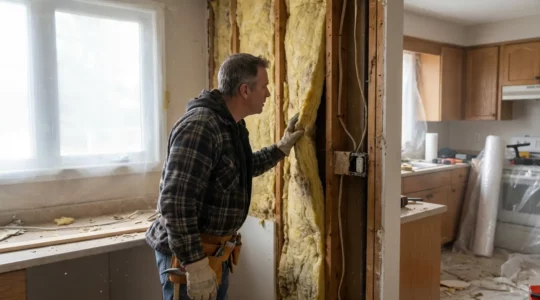
The Hidden Cost of Skipping Insulation Upgrades During Renovations
The contractor is standing in your half-demolished kitchen, waiting for an answer. Adding insulation to those exposed walls? It’s another $2,400 on top of an already stretched budget. Your spouse thinks it’s unnecessary. The house has been fine for 40…
Read more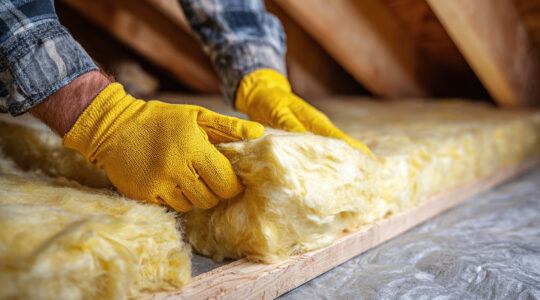
How Energy-Efficient Renovation Transforms Ottawa Homes
Your January heating bill just hit $380. Again. The thermostat reads 21°C, yet cold air seeps through that basement corner every time the wind picks up. Sound familiar? Thousands of Ottawa homeowners face this same frustration each winter, watching money…
Read more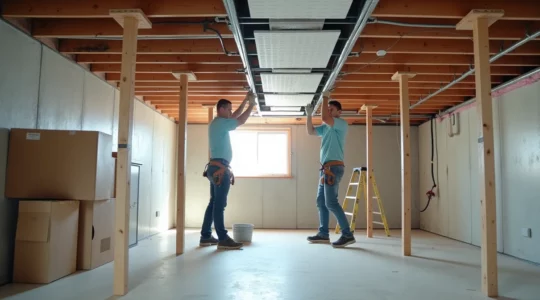
How to Choose Ceiling Tiles That Block Noise from the Floor Above?
Stopping overhead noise requires more than just ‘acoustic’ tiles; it demands a complete ceiling system where every part works together. True sound blocking combines mass and absorption (high-density tiles, mineral wool insulation) with structural decoupling to stop vibrations. A well-designed…
Read more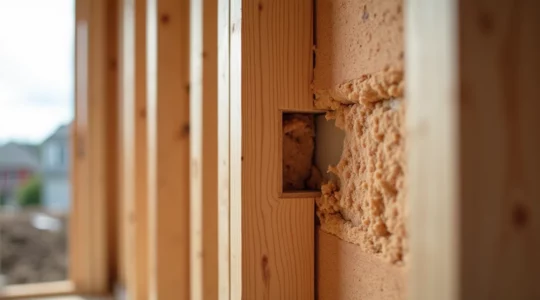
Why Smart Framing, Not Just More Lumber, Is the Future of Building
The real performance of a wall isn’t just its R-value; it’s how effectively the framing system defeats heat loss through thermal bridging and air leakage. Traditional framing creates “thermal highways” of solid wood that bypass your insulation, making ghost lines…
Read more
How to Insulate a 100-Year-Old Brick House Without Destroying It?
Insulating your heritage brick home with modern materials like spray foam doesn’t just lower your heating bills; it can actively destroy the historic brick it’s meant to protect. Heritage walls need to “breathe”—a process modern, impermeable insulation blocks, trapping moisture…
Read more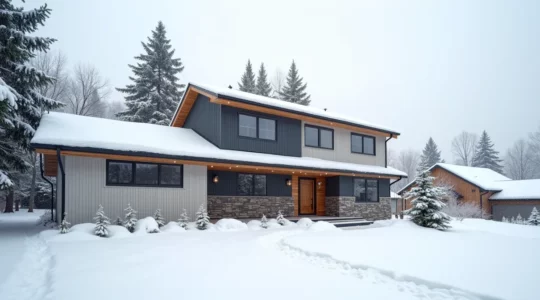
Vinyl, Wood, or Fiber Cement: Which Siding Offers the Best ROI in Canada?
The highest return on investment for Canadian siding projects comes not from the material itself, but from mastering the complete building envelope system. Proper insulation and moisture management (rainscreen) offer greater long-term value than simply choosing a premium material. Installation…
Read more
Why Did Your Deck Post Lift 3 Inches This Winter?
The 3-inch lift in your deck post is a symptom, not the disease. The root cause is a predictable failure in managing the trifecta of water, frost-susceptible soil, and freezing temperatures. Frost heave isn’t just water freezing; it’s the formation…
Read more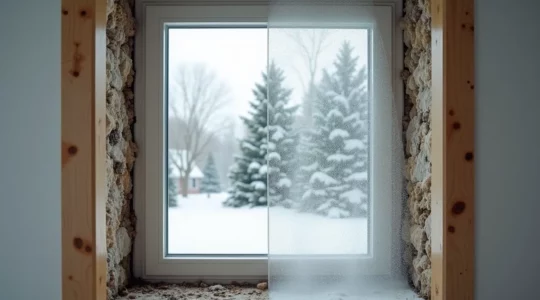
Why Changing Windows Can Cause Mold if You Don’t Fix Ventilation?
Upgrading your windows without addressing your home’s ventilation is a primary cause of new moisture and mold problems; you’ve plugged the leaks without giving moisture a new way to escape. Your house operates as a single, interconnected system where changing…
Read more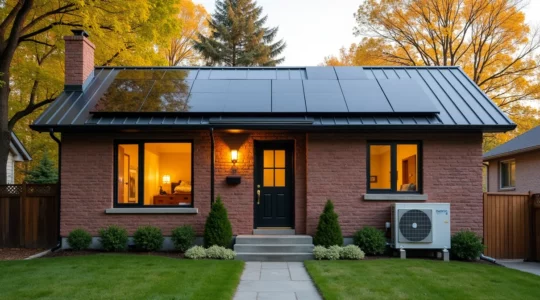
How to Renovate a 1950s Bungalow to Near Net-Zero Standards?
Transforming a classic 1950s bungalow into a net-zero powerhouse is not about a random checklist of expensive upgrades; it’s about a strategic, system-level approach that prioritizes the building envelope first. Aggressive air sealing and attic insulation offer a far greater…
Read more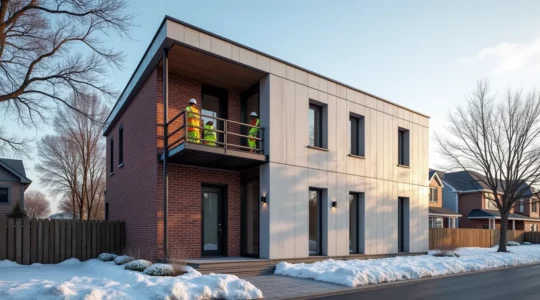
How Prefabricated Panels Can Reclad a Building in Just Two Weeks
The era of slow, disruptive building retrofits is over. Prefabricated insulated panels enable an “Agile Retrofit” that transforms a building’s envelope in as little as two weeks, minimizing tenant disruption and accelerating ROI. Off-site manufacturing ensures precision and speed, moving…
Read more